
Chilled water pipe insulation
for data centers
Prefabricated, removable insulation for rooftop mains, mechanical-yard piping and chiller connections. Each component arrives shaped to fit, with a factory-applied polyurea exterior for outdoor exposure.
Discuss your chilled water piping →Data center cooling applications
- Chilled water supply and return mains
- Mechanical yard piping
- Chiller, pump and cooling tower connections
- Condenser water lines
- Grooved piping and couplings
- Pipe supports and saddles
- Thermal storage and buffer tanks
- Packaged chiller and pump skids
- Buried mains where they come above grade
Between the chiller plant and the building connections, chilled water supply and return mains cross mechanical yards, roofs and pipe racks. Exposed insulation has to withstand sun, rain, freeze-thaw cycles and equipment contact during construction and service.
Dragon Jacket combines a closed-cell polyisocyanurate (PIR) core with a factory-applied polyurea exterior. Straight sections and fitting covers arrive shaped to the piping geometry. They close around the pipe or fitting, secure with banding and can be removed for service.
Built for the cooling plant
Outdoor chilled water supply and return mains
- Supply and return mains between the chiller plant and the data hall, on racks, roofs and through mechanical yards
- Insulation limits heat gain into chilled water and helps control surface condensation when sized for the design dew point.
- The factory-applied polyurea exterior protects the insulation from weather and mechanical damage.
- Select thickness for the fluid temperature, design dew point and specified minimums. Detail vapor control at joints, terminations and supports.
Chiller connections and mechanical-yard piping
- Chiller, pump and cooling tower connections with closely spaced valves, strainers and flex connectors
- Removable insulation at flanged connections and valve bodies that require service access
- Impact-resistant polyurea exterior for exposure during equipment placement, rigging and commissioning
- Insulated pipe supports and saddles selected for the load and detailed for continuity with adjacent insulation
Factory-fabricated insulation for valves and fittings
Dragon Jacket shapes rigid PIR insulation to fit valves, flanges, reducers and grooved couplings, including Victaulic® fittings. Each cover is encapsulated in polyurea at the factory. It closes around the component and is secured with banding, reducing field cutting and jacketing.
Remove and reinstall individual covers for inspection or service. Restore the specified joint closures after refitting.
Packaged equipment and thermal storage
- Factory-fit insulation for chiller skids, pump packages and modular plants, shipped with the equipment
- Thermal storage and buffer tanks, where large surfaces carry standby losses and condensation risk
- Components fabricated from the OEM’s CAD model for consistent fit across matching assemblies
- Factory-applied exterior protection with joint details matched to the package
Installation and maintenance access
- Prefabricated components arrive sized and labeled for the piping they fit
- Factory-shaped parts reduce field cutting and fitting at changes in pipe geometry.
- Remove individual covers for commissioning checks or maintenance and reinstall them using the specified joint closures.
Shorter project timelines
Multiple layers.
Many steps.
- 01Insulation
- 02Tape
- 03Vapor retarder
- 04Jacketing
- 05Joint sealant
Each layer is a separate material, fitted on the job site by a specialty trade. Every seam, sealant joint and lap is a potential leak path, and every layer is another pass along the pipe.
One assembly.
Two steps.
- Insulation
- Vapor retarder
- Jacketing
Components arrive sized and labeled for the pipe or fitting they cover. Each assembly closes around the component and is secured with banding. Complete the specified joint closures and terminations for chilled water service.
On a data center build, insulation is usually the last trade on the mains and the first thing waiting on weather. Because Dragon Jacket arrives as one prefabricated assembly, there is no jacketing, tape or vapor retarder to apply in the field, and the hours an insulation contractor needs on the piping drop sharply. On many projects the work folds into the mechanical scope instead: the pipefitters who hung the pipe close the insulation in behind themselves with hand tools. Either way, insulation comes off the critical path.
In Milan, Missouri, general construction personnel insulated 1,800 linear feet of 10- and 16-inch welded steel across three elevated bridge crossings in approximately 65 labor-hours.
Outdoor durability and service access


Conventional layered insulation
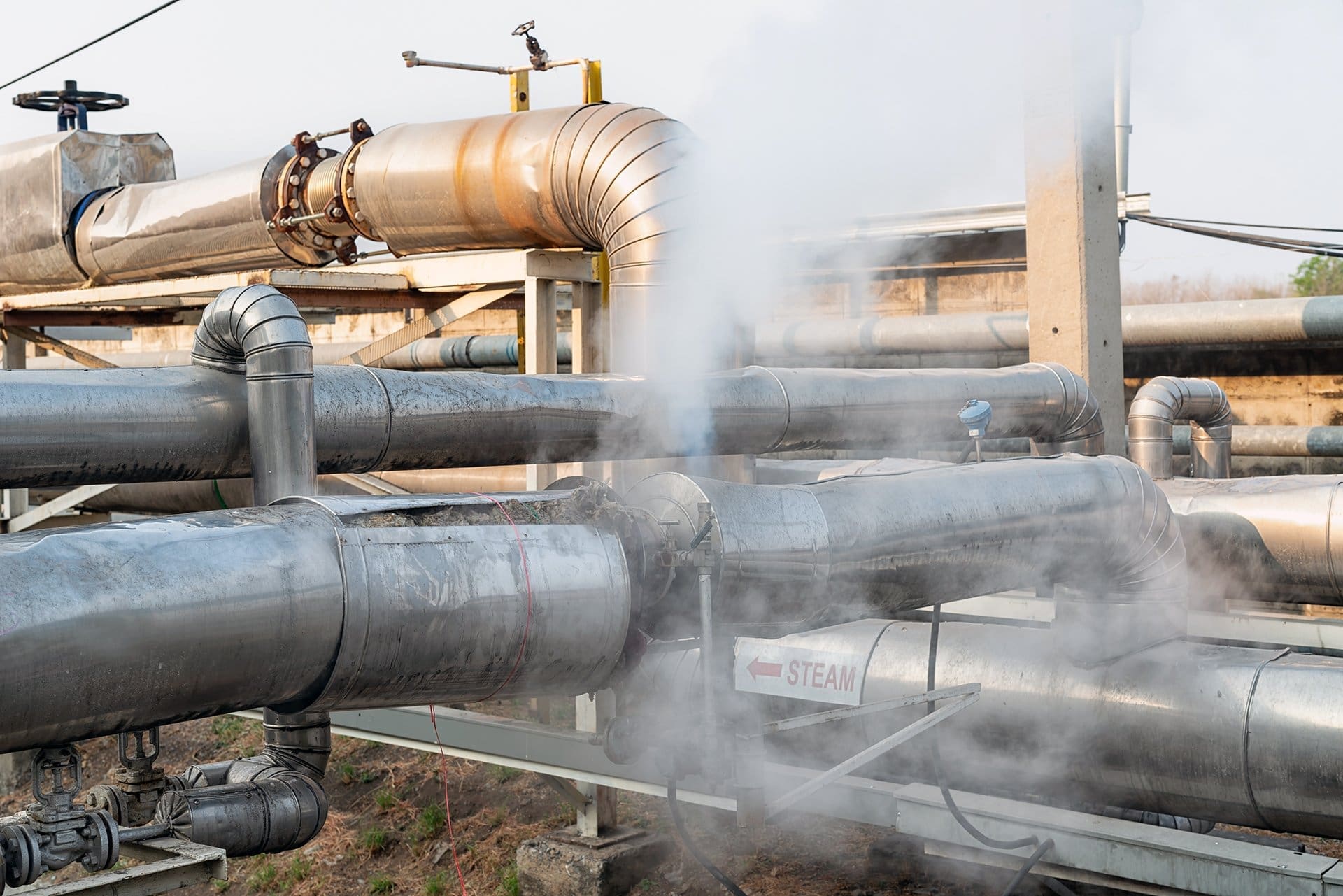
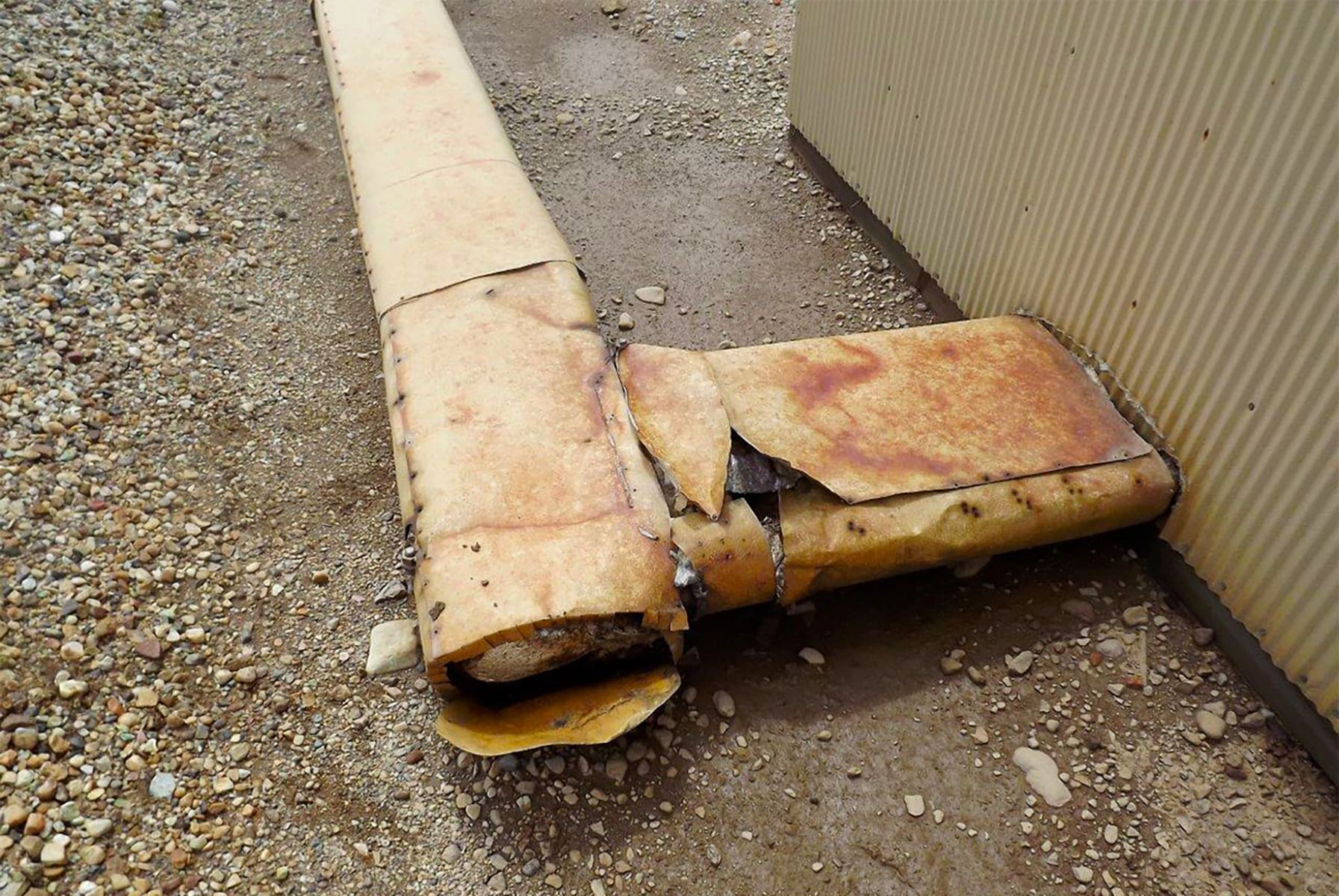
- Exposed jacket seams can open with weathering and thermal cycling.
- Moisture in insulation can increase heat gain into the chilled water.
- Equipment placement and maintenance can dent exposed jacketing.
- Cutting out insulation for inspection can require replacement.
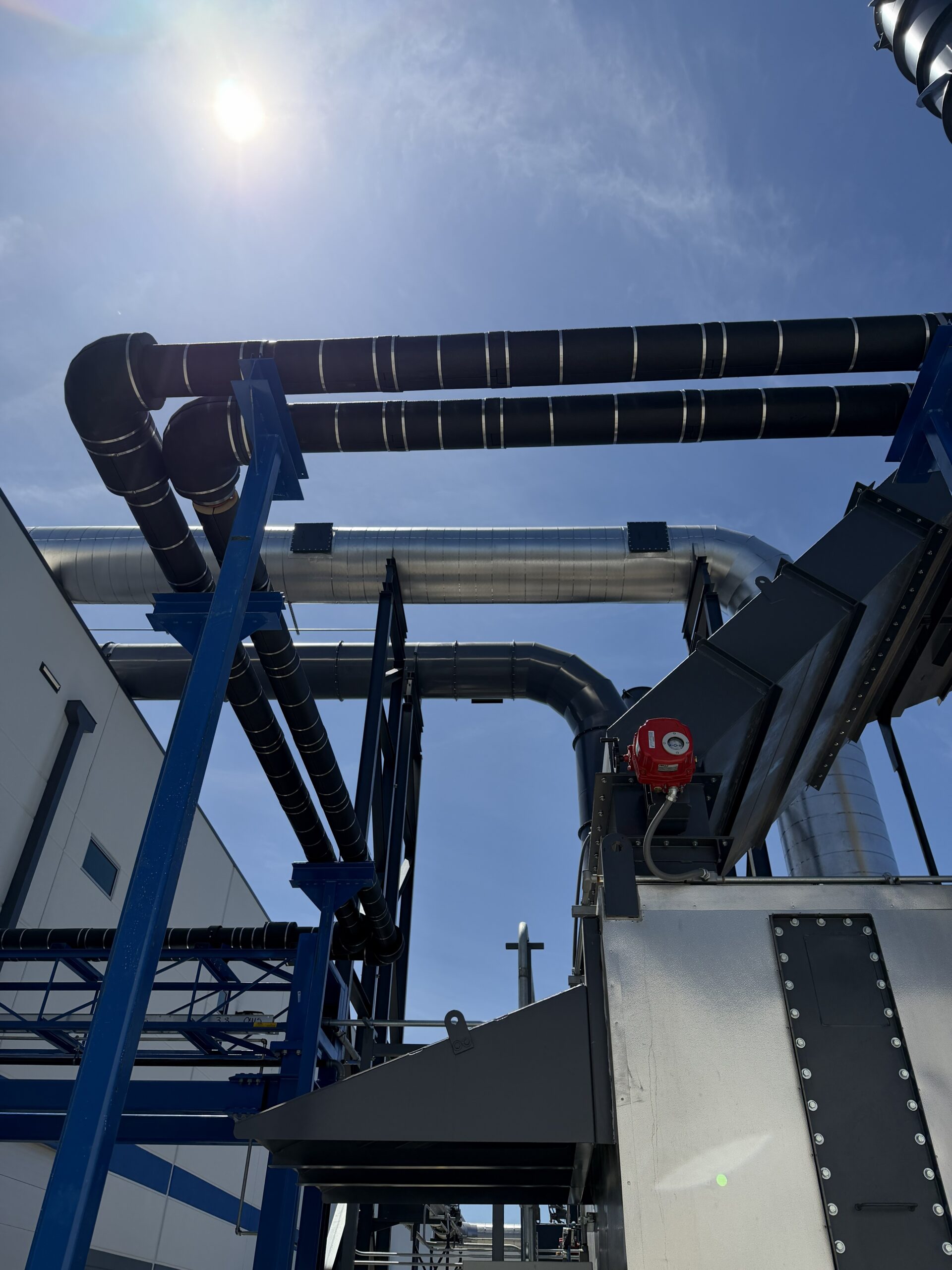
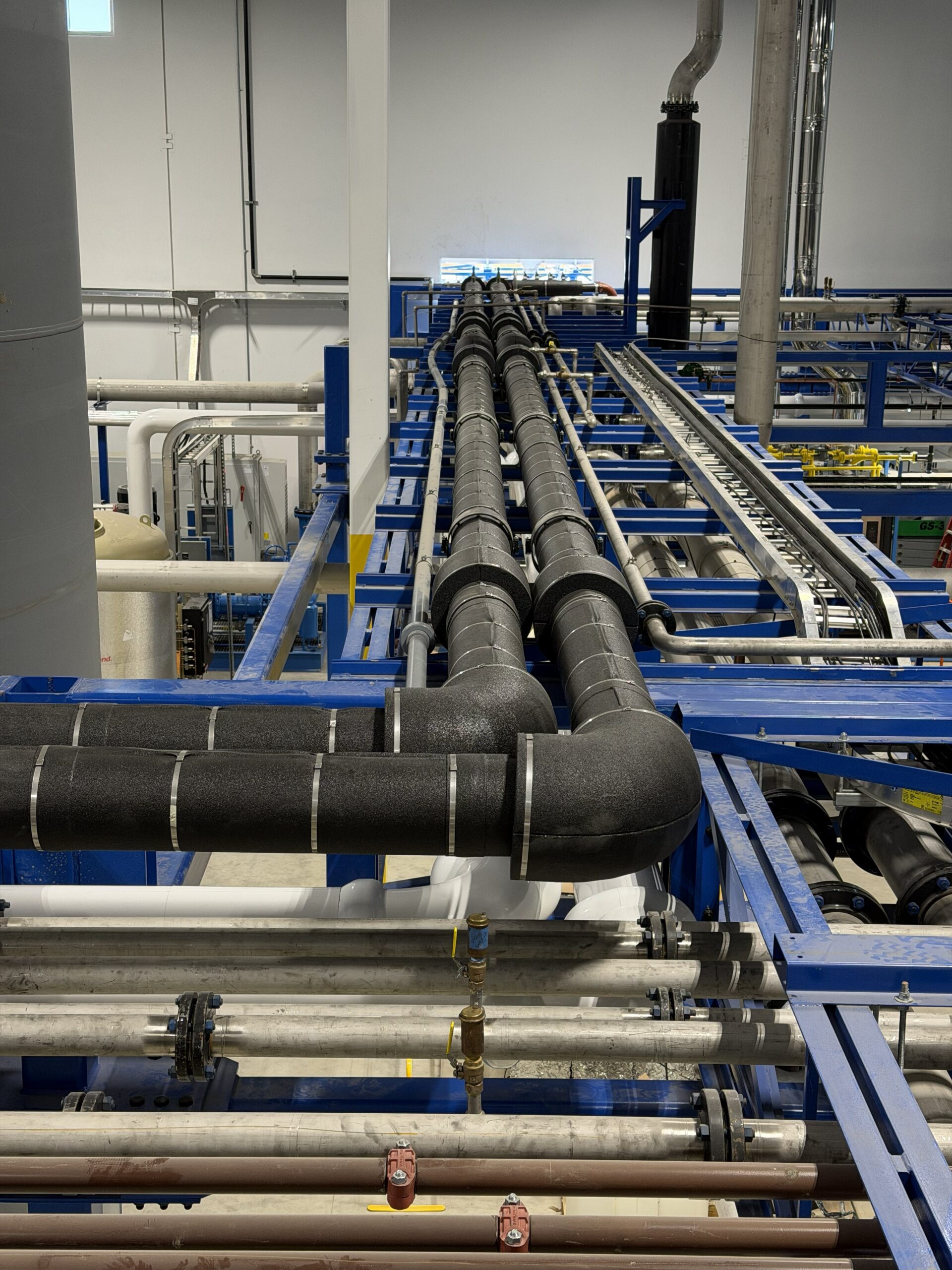

- Factory-applied polyurea exterior over a closed-cell PIR core
- Water vapor transmission of 0.64 grains/hr·ft² or less (ASTM E96)
- Jacket impact resistance of 320 in-lb (ASTM D2794)
- Core water absorption of less than 0.6% by volume (ASTM C272)
- Removable and reusable at couplings, valves and equipment connections
Heat entering the chilled water adds to the load at the cooling plant. Insulation thickness limits heat gain. Continuous vapor control at joints, terminations and supports helps protect the insulation in below-ambient service.
Dragon Jacket is rated R-6.25 per inch at 75°F when new, and we design to an aged value of R-5.3 per inch. The closed-cell core absorbs less than 0.6% water by volume, so water doesn’t erode that value in service. Thickness and assembly details are selected for the site’s conditions.
Thermal performance
Common questions
How do you control condensation on chilled water lines?
Select insulation thickness so the outer surface stays above the ambient dew point at the design conditions. Detail vapor control across joints, terminations, fittings and supports to limit moisture ingress.
How is thickness chosen?
We check the specified minimum thickness for the pipe size and fluid temperature, including ASHRAE 90.1 where applicable. We then evaluate insulation surface temperature against the site’s design dew point.
Can it be used indoors or in plenums?
Indoor and plenum use depends on the insulation configuration and the project’s fire and smoke requirements. Share the specification so we can confirm the documentation for the proposed assembly.
Other industries we serve
Water &
Wastewater
Freeze protection for exposed mains, bridge crossings and bypass piping.
Explore industry →Oil &
Gas
Removable insulation for tank batteries, produced-water piping, skids and wellheads.
Explore industry →Mining
Freeze protection on the surface and bulk air cooling piping underground.
Explore industry →Food &
Beverage
Washdown-tolerant insulation for process, chilled and hot water lines.
Explore industry →Shorter timelines
Longer lifespan
Send us your piping drawings or isometrics, pipe sizes and fitting models, supply and return temperatures, design ambient temperature and humidity, and specified insulation thickness. We’ll identify the components, check thickness and review the installation details with you.