
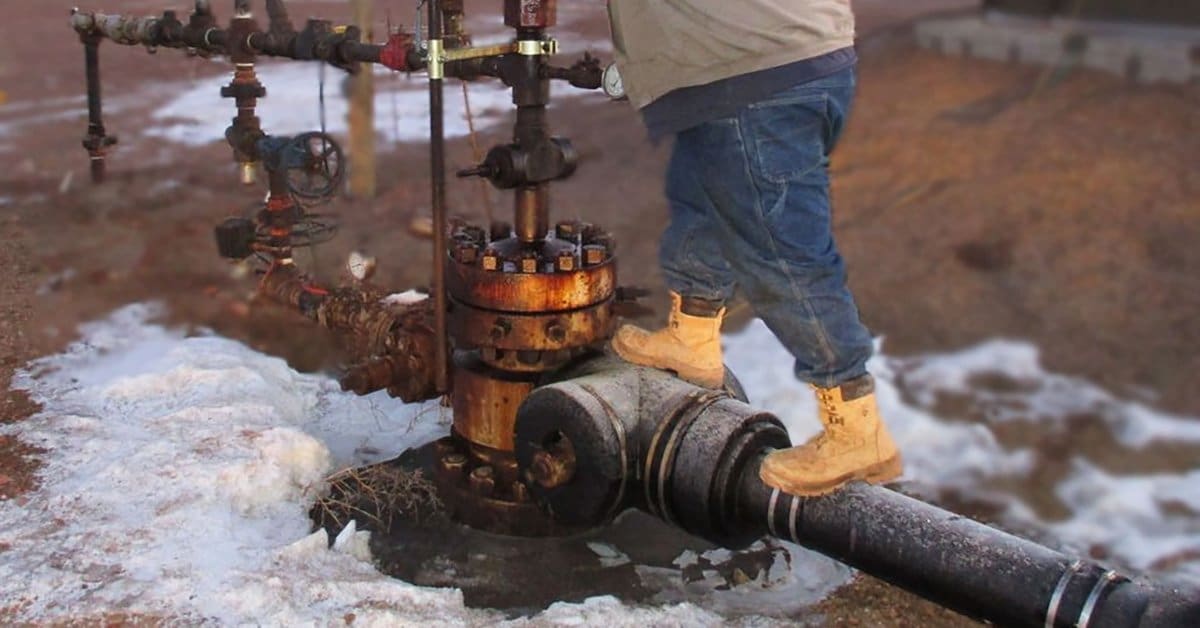
What does durable mean?
Durable insulation maintains its shape, its thickness and its protective layer for the life of the line, not just on the day it is installed.
Conventional insulation is specified by its day-one performance: an R-value measured on a dry sample in a laboratory. Maintaining that performance is left to the jacketing, the sealant and the people working around it. ASTM’s guide to industrial insulation systems states that insulation needs protection from rain, snow, wind and UV, and from the external forces that cause mechanical damage.3 In a conventional insulation system that protection is a separate layer, applied in the field, with its own seams.
Dimensional stability, an insulation’s ability to maintain its size and shape through heat, cold, humidity and age, is part of durability, but only part. The rest is what happens when the insulation is stepped on, struck, washed down, splashed and exposed to the elements for a decade.
How does insulation get damaged?
By human contact, by weather, and by work performed around it.
- Foot traffic and contact. The National Insulation Association’s own guidance says the most common way mechanical insulation is damaged is by human contact: walked on, ladders leaned against it, tools set on it, crushed by the trades that follow the insulator.1 In NIA’s words, “A crushed system is a compromised system.”1
- Weather. Outdoor insulation takes moisture, snow load and falling ice, and the jacketing and the insulation under it expand and contract at different rates, which works the seams open.1 Industrial plants may have 85% or more of their insulation outdoors.1
- Maintenance and inspection. Accessing the pipe means cutting through the insulation, and in plants it is routinely removed or damaged during the work.1 The Department of Energy notes that insulation “frequently becomes damaged or is removed and never replaced during steam system repair.”4
- Jacketing failure. Jacketing is the weather barrier. It tears under foot traffic, splits at supports that were not designed for it, corrodes where process fluids reach it, and its sealant ages at every lap and butt joint.2 Jacketing improves resistance to damage; it does not make the system damage-proof.1
- Compression. Fibrous insulation relies on its jacketing to maintain thickness, and thin metal jacketing is easily compressed by environmental stressors like foot traffic, over-tightened bands, and impact from tools or equipment.1 Compressed insulation is thinner insulation.
- Chemicals and washdown. Process fluids that reach metal jacketing corrode it, and washdown water finds every lap and butt joint where the sealant has failed.2 Whatever gets in is retained.

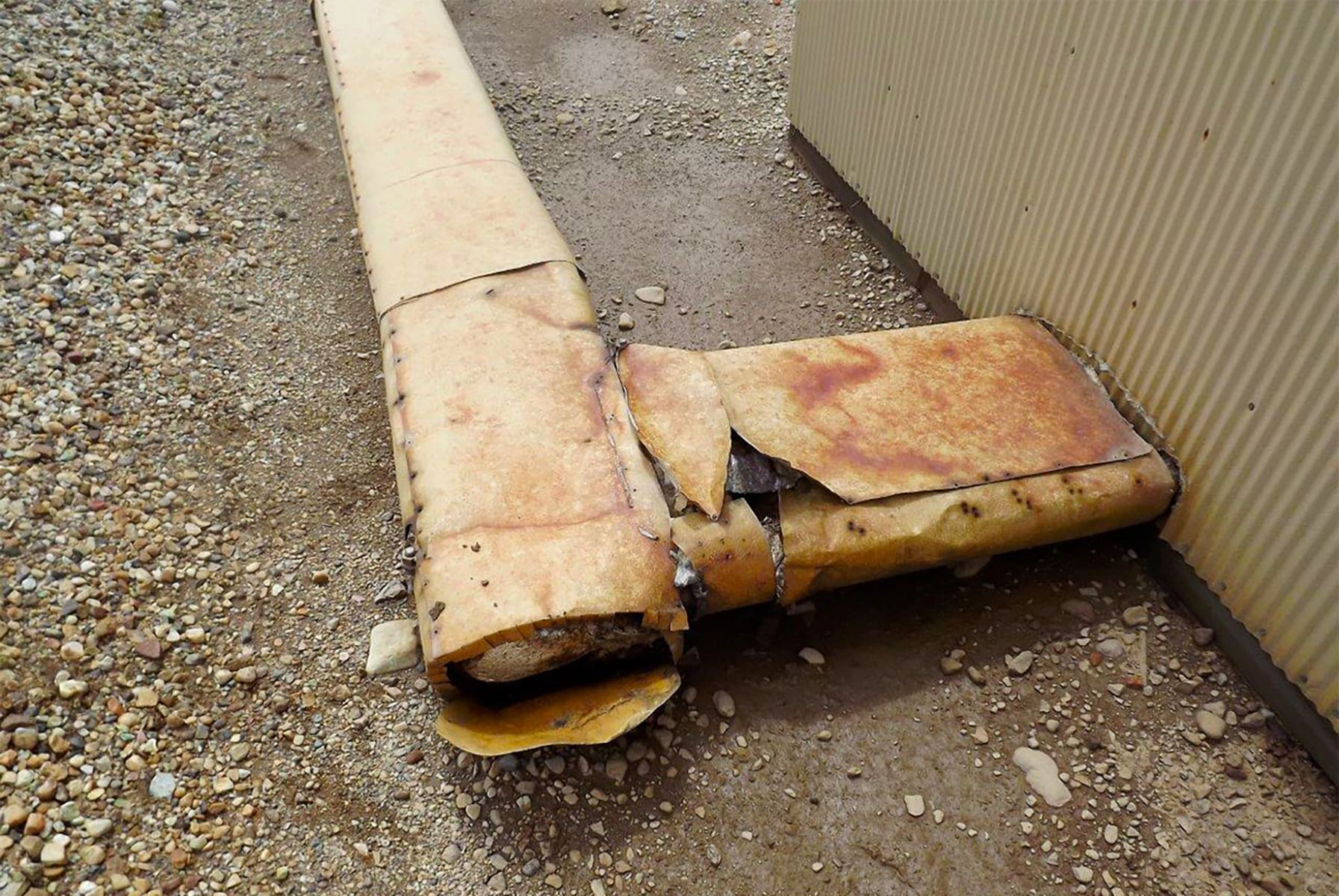
“The damage is initially inflicted on the jacketing itself, then on the insulation.”
Gordon H. Hart, P.E., Insulation Outlook, 20082
What does damage cost?
A dent is not cosmetic. It is the start of a wet-insulation problem.
- Heat loss. Once the jacket is breached, rain and condensation reach the insulation.2 In a 2026 NIA study, fibrous insulation with 5% moisture lost a quarter of its insulating value, and saturated insulation passed three times the heat.8 Our thermal stability page covers the mechanism.
- Corrosion. Water held against the steel by damaged insulation is how corrosion under insulation starts. API RP 583 points inspectors at damaged insulation and jacketing first.6 Our CUI page covers where it happens and what it costs.
- Replacement, not repair. Crushed or wet fibrous insulation is not reused. The section is stripped and re-insulated, which is the full installation labor a second time, plus the access and the insulation waste.1 NIA’s guidance is to replace damaged insulation quickly, because the damage spreads.1
- Design workarounds. Specifiers address the problem with damage-resistant jacketing on piping up to 8 feet above grade and walkways to keep people off the insulation.1 That is added cost to protect a material that cannot protect itself.
How does Dragon Jacket hold up?
We filmed the things that happen to insulation on a job site and did them to Dragon Jacket.
These demonstrations show the point of the design: there’s no malleable jacketing to dent and no fibrous core to crush. The polyurea encapsulation rebounds after impact and the closed-cell core behind it maintains its shape.
-
Encapsulation, not jacketing
Every surface of each component, mating faces included, is encapsulated at the factory in 60 mils of polyurea. Impact resistance is 320 inch-pounds (ASTM D2794), the falling-weight test used for organic coatings.5 It is the same class of coating Caltrans specified for the precast concrete of the San Mateo–Hayward Bridge, with a 20-year service life and no short-term maintenance as the goal.7
-
A core that maintains its thickness
Closed-cell polyisocyanurate with a compressive strength of 22 psi in the standard 2-pound core, and 72.5, 132 and 210 psi in the 4-, 6- and 8-pound cores for buried and loaded service (ASTM D1621).5
-
No field seams to fail
No laps, no screws, no sealant to age.2 The hinge across the top of each component is the polyurea itself, and the only open joint is the seam along the bottom, where anything that reaches it drains out.
-
Designed for direct exposure
Rated for service from −40°F to 300°F, with 350°F intermittent. Water vapor transmission of 0.64 grains per hour per square foot or less (ASTM E96), and rated excellent in 7-day water immersion testing.5 Polyurea is used as an exposed exterior coating on bridges for the same reason it is used here.7
-
Washdown and chemical exposure
In 7-day immersion testing the polyurea encapsulation rates excellent in water, 50% sodium hydroxide, 50% potassium hydroxide, calcium hypochlorite, crude oil, ethylene glycol and saline, and good in bleach, sea water, 50% phosphoric acid, 10% sulfuric acid, 5% hydrochloric acid, kerosene and DEF.5 Pressure washing is in the videos above.
-
Damaged components are replaced, not re-insulated
If a component is ever damaged beyond use, remove the banding, replace the component and re-band. The components on either side are untouched, and nothing is stripped, re-jacketed or sealed.
Limitations
Dragon Jacket is impact resistant, not indestructible. The videos demonstrate impact and load resistance. Keep vehicles off insulated lines and provide walkways where the guidance calls for them.1 Polyurea resists abrasion and impact, but a blade will cut it. Check the chemical resistivity table before specifying around solvents and strong acids: mineral spirits, 10% nitric acid and 10% acetic acid rated only moderate in immersion testing.5

What the tests say
| Property | Test method | 2 lb core (standard) | 4 lb core | 6 lb core | 8 lb core |
|---|---|---|---|---|---|
| Density, lb/ft³ | ASTM D1622, EN 1602 | 2 | 4 | 6 | 8 |
| Compressive strength, psi | ASTM D1621, EN 826 | 22 | 72.5 | 132 | 210 |
| Impact resistance, in‑lb | ASTM D2794 | 320 | 320 | 320 | 320 |
| Water vapor transmission, grains/hr·ft² | ASTM E96 | ≤0.64 | ≤0.64 | ≤0.64 | ≤0.64 |
| R-value per inch | ASTM C518, EN 12667 | 6.25 | 5.46 | 5.26 | 5.0 |
| Thermal conductivity, Btu·in/hr·ft²·°F | ASTM C518, EN 12667 | 0.16 | 0.18 | 0.19 | 0.20 |
| Service temperature, °F | ASTM D4065, E2347 | −40 to 300 | −40 to 300 | −40 to 300 | −40 to 300 |
| Maximum intermittent temperature, °F | ASTM D4065, E2347 | 350 | 350 | 350 | 350 |
Where it matters most
Common questions
Can it be walked on?
It withstands incidental foot traffic and dropped tools without losing thickness or opening a seam. It is not designed as a walkway, and National Insulation Association guidance recommends keeping people off insulated lines.1
What happens if a component is damaged?
Replace the component. Remove the banding, swap the component, re-band. The components on either side stay in place. If the polyurea is gouged but the core under it is dry and intact, send us a photo before patching; some gouges can be sealed in the field and some are better replaced.
Does UV exposure degrade it?
Polyurea is specified as an exposed exterior coating on concrete bridge structures with a 20-year service life as the goal.7 Our oldest exposed installations date to 2018 and are still in service.
Can it be pressure washed or sanitized?
Yes. The polyurea encapsulation rates excellent in 7-day water immersion testing, and the only open joint is the seam along the bottom of each component, which drains. For cleaning chemicals, check the chemical resistivity table on the technical data sheet; sodium hydroxide, potassium hydroxide and calcium hypochlorite rate excellent, bleach and 50% phosphoric acid good.5
Does it shrink, warp or sag with temperature?
Within its rated temperature range it maintains its shape and thickness. There is no fibrous core to settle and no separate jacketing to work loose from the insulation under it. We have not had a performance callback on an installed system.
What is the warranty?
A five-year limited product warranty. The terms are on the product warranty page.
Sources
- Fisher, S. Avoiding Mechanical Insulation Damage. Insulation Outlook, National Insulation Association, December 2015. Source for human contact as the most common cause of damage, the 85% outdoor figure, weather and maintenance damage, the limits of jacketing, the 8-foot damage-resistant zone and walkways, and the quotation.
- Hart, G. H. Maintain Insulation Jacketing To Ensure Mechanical Insulation Performance. Insulation Outlook, National Insulation Association, July 2008. Source for the causes of jacketing failure, sealant aging at joints, water entry after a breach, and the quotation.
- ASTM International. ASTM C1696-26, Standard Guide for Industrial Thermal Insulation Systems. Source for the need to protect insulation from the elements and from external forces that cause mechanical damage, and for the caution that laboratory results do not necessarily predict installed performance.
- U.S. Department of Energy, Advanced Manufacturing Office. Insulate Steam Distribution and Condensate Return Lines, Steam Tip Sheet #2, January 2012. Source for the observation that insulation is damaged or removed during repairs and never replaced.
- Dragon Jacket Insulation. Technical data sheet, May 2026: density (ASTM D1622), R-value and thermal conductivity (ASTM C518), compressive strength (ASTM D1621), impact resistance (ASTM D2794), water vapor transmission (ASTM E96), service temperatures (ASTM D4065, E2347) and chemical resistivity from 7-day immersion testing, for the 2-, 4-, 6- and 8-pound cores.
- American Petroleum Institute. API Recommended Practice 583, Corrosion Under Insulation and Fireproofing, 1st edition, 2014. Damaged insulation and jacketing as locations susceptible to CUI.
- Limas, F., Harris, D. and Ishmael, T. Cal-Poly coatings. Roads & Bridges, February 18, 2002. Caltrans’ San Mateo–Hayward Bridge widening: a minimum 63-mil polyurea coating system on 3.2 million square feet of precast concrete girders, pilings and deck panels, with a 20-year service life and no short-term maintenance as the stated goal.
- Rana, A. R. K. and Brigham, G. Decreased Thermal Performance: An Often-Neglected Outcome of Moisture-Saturated Insulation. Insulation Outlook, National Insulation Association, May 2026. Source for the 25% loss at 5% moisture and the threefold heat loss when saturated.
- ASTM International test methods cited on the data sheet: D2794, resistance of organic coatings to the effects of rapid deformation (impact); D1621, compressive properties of rigid cellular plastics; E96, water vapor transmission of materials; C518, steady-state thermal transmission properties; D1622, apparent density of rigid cellular plastics.
Dragon Jacket documents