
Durability for the field
Access for inspection
Durable, removable insulation for tank batteries, produced-water piping, production skids and wellheads.
Request a project quote →Pipe insulation for oil & gas surface production facilities
- Produced-water transfer and loadout
- Tank batteries and tank outlets
- Production skids
- Wellheads and casing isolation valves
- Separator liquid handling
- Condensate and dump lines
- Fuel-gas systems
- Temperature-maintained oil transfer
- Loading manifolds and loading arms
Surface production piping needs insulation that can handle outdoor exposure and still provide access for maintenance. Dragon Jacket combines a closed-cell polyisocyanurate insulation core with a tough, factory-applied polyurea exterior to reduce heat loss and protect the insulation from weather and mechanical damage.
Prefabricated components cover straight pipe, elbows, tees, valves and flanges. Removable sections allow crews to inspect and service the piping, then reinstall the insulation.
Built for production piping
Produced-water transfer and loadout
- Exposed produced-water lines, tank outlets, pump manifolds and truck-loadout piping
- Heat loss is highest during low-flow operation and shutdowns, when nothing warm is moving
- Pipe and fittings insulated as one assembly, valves and flanges included
- Installs over heat trace as part of the complete freeze-protection system
Production skids and surface facility interconnections
- Condensate handling, water transfer, fuel-gas systems and tank-battery interconnections
- Closely spaced fittings, flanged connections and irregular geometries
- Factory-fabricated components configured around the piping specified for insulation
- Custom components for equipment clearances and access requirements
Wellheads and separator liquid handling
- Wellhead assemblies, short surface flowlines, separator liquid-dump valves and associated piping
- Custom components fit around the valves and fittings, with operating handles and inspection points left clear
- Removed and reinstalled as often as the inspection schedule requires
- Thickness and any supplemental heating matched to the fluid, operating conditions and expected shutdown duration
Temperature-maintained oil transfer
- Crude oil and fuel oil held above a minimum handling temperature
- Heat loss raises viscosity and slows transfer
- Transfer lines, tank connections, strainers and loading manifolds
- Strainers and valves serviced without replacing the insulation afterward
Proven on real projects
Installations at wellheads, gas storage, gas dehydration and condensate handling, several of them by the operator’s own crew.
Shorter project timelines
Multiple layers.
Many steps.
- 01Insulation
- 02Tape
- 03Moisture barrier
- 04Jacketing
- 05Joint sealant
Each layer is a separate material, assembled on the job site by a specialty trade. Every seam, sealant joint and lap is a potential leak path.
One assembly.
Two steps.
- Insulation
- Moisture barrier
- Jacketing
Prefabricated assembly of the insulation, moisture barrier and jacketing. It arrives sized to the pipe, closes around it, and is banded shut by the crew already on site.
Dragon Jacket pipe insulation installs in two steps: the prefabricated assembly clamshells around the pipe and is secured with a band. Insulation, moisture barrier and jacketing are combined into one piece, so there is no jacketing, tape or vapor barrier to apply in the field, and the operator’s own crew can install it between other work.
At Peoples Gas in Champaign, Illinois, a 10-inch above-ground gas storage line with its valves and flanges was insulated in about 40 labor-hours. At Repsol’s pad in Troy, Pennsylvania, the operator’s own crew installed the condensate dump line after a few hours of training, saving an estimated 100 labor-hours.
Longer project lifecycles


Conventional
- Susceptible to moisture intrusion and damage
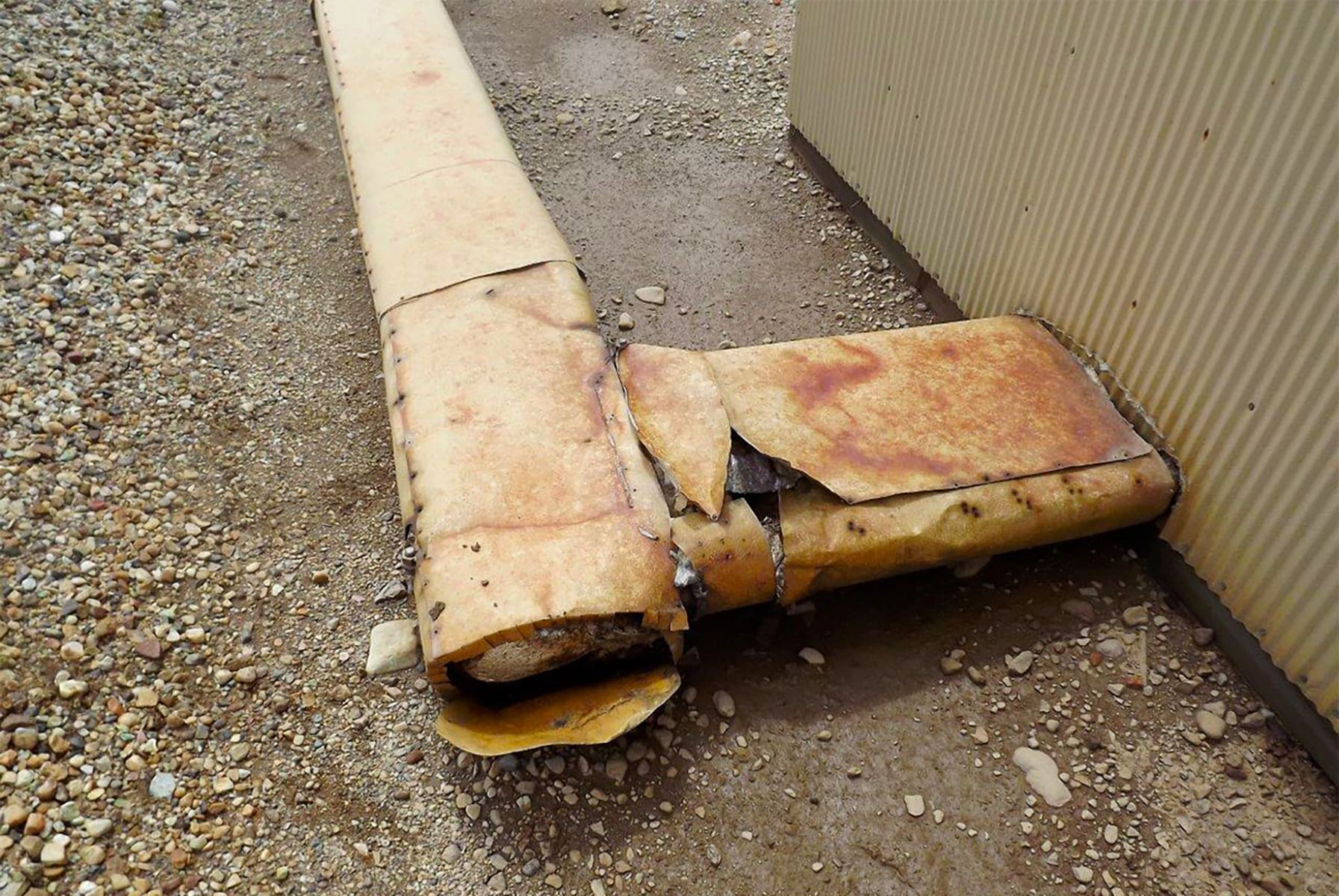
- Crushed under foot traffic on walkways and skids
- Cut away for inspection and rarely replaced
- Degrades with prolonged UV and weather exposure


- Closed-cell core and polyurea exterior, no separate metal cladding
- Removable and reusable for weld inspection, valve service and flange maintenance
- Factory-fabricated fittings through elbows, tees and valves
- Resists weather exposure and mechanical damage
Moisture control and inspection access both matter when managing corrosion under insulation. Dragon Jacket’s polyurea encapsulation keeps water out of the insulation, and sections come off so the pipe surface can be inspected directly. Installation, joint detailing, pipe coatings and ongoing inspection remain part of the corrosion-management approach.
Dragon Jacket is rated excellent for exposure to crude oil, ethylene glycol, calcium chloride and water, good for kerosene and sea water, and fair for diesel fuel. Six years after installation, RTR’s original North Dakota wellhead kits are still in service through winters, wind and repeated removal for inspection.
Thermal performance
Common questions
Will insulation alone prevent freezing?
Insulation slows heat loss; it does not generate heat. Low-flow or stagnant lines may need supplemental heating. Freezing associated with pressure reduction requires a separate assessment of the process conditions.
Can the insulation be removed for inspection?
Yes. Dragon Jacket components are designed for removal and reinstallation, providing access to the underlying piping and fittings. Follow the installation instructions when securing components and restoring joints.
Does it work with heat trace?
Yes. Components install over existing heat trace cable or glycol tubing, and the [Q]Core option integrates heating into the insulation itself. Because the closed-cell core absorbs less than 0.6% water by volume, the trace works against the heat loss it was sized for.
Other industries we serve
Water &
Wastewater
Freeze protection for exposed mains, bridge crossings and bypass piping.
Explore industry →Mining
Condensation control for bulk air cooling and chilled water lines at depth.
Explore industry →Chemical
Chemical-resistant insulation for process lines, splash zones and washdown areas.
Explore industry →Food &
Beverage
Washdown-tolerant insulation for process, chilled and hot water lines.
Explore industry →Shorter timelines
Longer lifespan
Send us your piping isometrics, equipment drawings or field dimensions, with the service fluid, operating and design temperatures, minimum ambient temperature, heat-trace details and maintenance-access requirements. We’ll come back with the components and insulation thickness for the job.