
Stolt Tankers Hot Water Lines
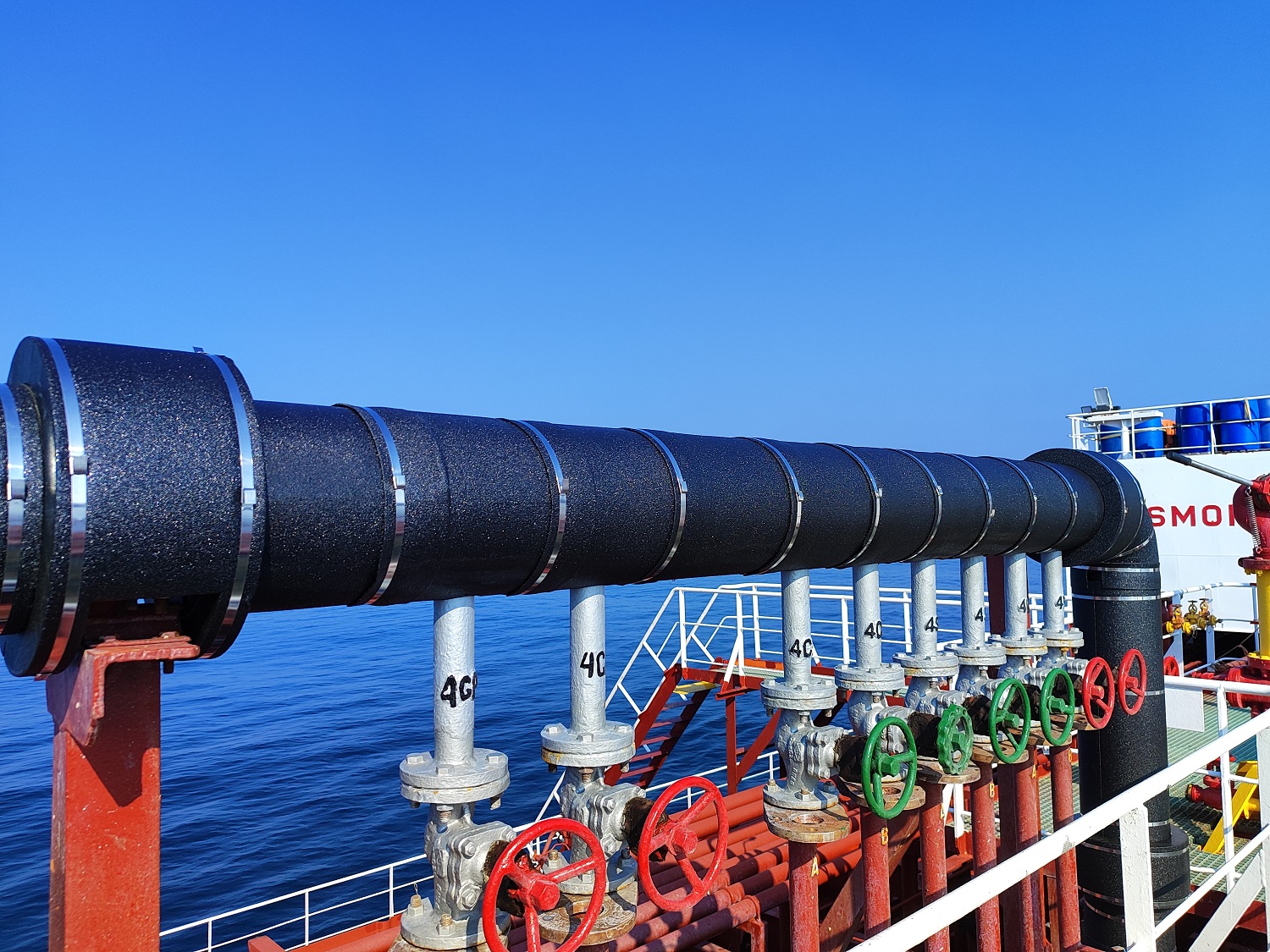
Hot water piping on a Stolt chemical tanker, insulated by the ship’s own crew while the vessel stayed in service.
- Client
- Stolt Tankers
- Vessel
- Chemical tanker
- Application
- Hot water lines
- Installed by
- The ship’s crew
Scope
- Hot water lines across the main deck
- Straight sections, elbows and vertical risers
- Flange covers
- Stainless steel bands
Results
- Insulated in service, with no extra time in the shipyard
- Flanges and bolts covered and protected
- The crew can repair, remove and reuse the insulation
- No armouring joints or metal sheeting for sea water to get past
The problem
Stolt’s ships are typically delivered from the yard with one of two insulation systems. Pre-insulated pipe with PIR foam and HDPE armouring leaves the flanges and bolts bare, so heat escapes there and the hardware still needs maintenance. On Stolt’s vessels, the armouring joints start to leak over time, salt water collects against the pipe, and the pipe can be lost within a decade.
The other option, rock wool under galvanized sheeting, keeps the ship in the yard longer while it’s installed, and water eventually gets in there too. The sheeting needs a rubber coating that doesn’t last, and damaged insulation can’t be reused, so the crew has to make new insulation by hand. Neither system can be removed and put back when a length of pipe is renewed.
The solution
Dragon Jacket fabricated the insulation to fit the vessel’s hot water piping, and the ship’s own crew installed it with the vessel in service, so there was no extra time in the shipyard.
Each section clamshells around the pipe and bands shut, including covers for the flanges and bolts. Nothing is glued or sheeted on, so the crew can take a section off for a repair, and when a length of pipe is renewed, the same insulation goes back on.
The polyurea shell fully encapsulates the closed-cell core, so there are no armouring joints or sheeting seams for sea water to work through.
Photos


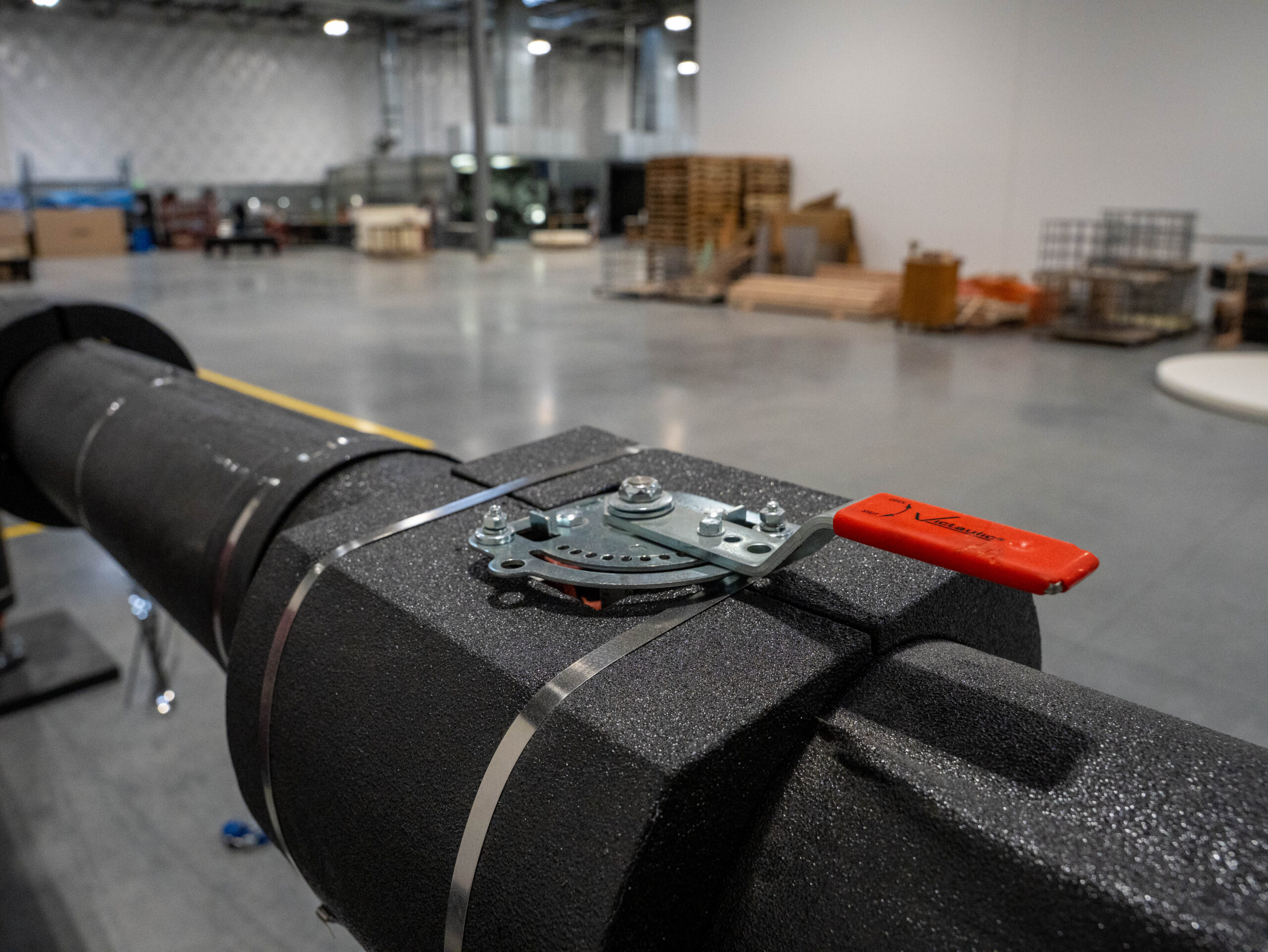
Dragon Jacket pipe insulation
Prefabricated pipe insulation with a closed-cell core encapsulated in polyurea, made to fit each system’s pipe, flanges and fittings. It installs by clamshelling and banding, and comes off and goes back on for service.
Shorter timelines
Longer lifespan
Have a line with the same problem? Send us the pipe sizes, fittings and conditions, and we’ll tell you what it takes to fix it for good.