All Posts By

dragonjacket

Industrial Pipe Insulation for Chemical Plants: Preventing Corrosion Under Insulation

By CUI, Industrial InsulationNo Comments

Modern chemical processing plants operate in some of the most demanding industrial environments. Pipes, valves, reactors, and tanks are exposed to corrosive chemicals, extreme temperatures, weather, washdowns, and continuous production cycles.

In these conditions, insulation serves several critical functions. Beyond thermal efficiency, insulation helps maintain process temperatures, protect equipment from corrosion under insulation (CUI), and ensure safe and reliable plant operations.

In many chemical processes, insulation also plays a key role in maintaining the flow of high-viscosity fluids such as polymers, resins, waxes, syrups, and specialty chemical intermediates. These materials require stable temperatures to remain pumpable. If pipe temperatures drop and viscosity increases, flow rates can decline and pipelines can become restricted or blocked.

For this reason, insulation in chemical plants is essential not only for energy efficiency but also for process stability, corrosion prevention, and long-term asset protection.

Many chemical facilities rely on traditional insulation systems such as fiberglass, mineral wool, elastomeric foam, calcium silicate, cellular glass, or perlite-based insulation. These materials are typically installed in layers and protected with metal or polymer cladding to shield them from environmental exposure. While these systems can provide adequate thermal performance initially, they often struggle in chemical processing environments. Common failure mechanisms include:

  • Moisture intrusion through seams or damaged jacketing
  • Chemical exposure from washdowns or process spills
  • UV degradation of exterior coatings and sealants
  • Mechanical damage during maintenance or inspection

Porous insulation materials can absorb liquids, and brittle materials such as calcium silicate or perlite insulation can crack when exposed to impact or repeated handling. Over time, sealants and tapes degrade, creating pathways for moisture and contaminants.

Once moisture enters the insulation system, corrosion can begin beneath the insulation layer. Because the damage occurs out of sight, corrosion under insulation often progresses undetected until significant pipe damage has already occurred. Insulation failure that leads to CUI results in insulation replacement costs, production downtime, and increased maintenance budgets.


Dragon Jacket Insulation (DJI) offers an alternative approach designed for demanding industrial environments.

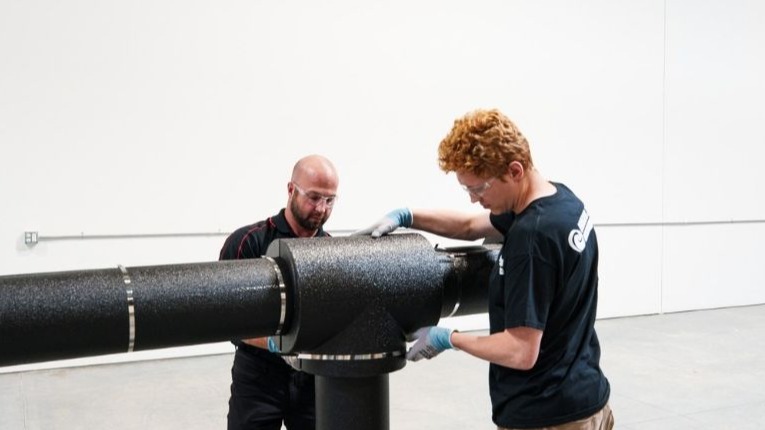
Dragon Jacket insulation is lightweight, durable, impact-resistant, and engineered to prevent moisture intrusion. Unlike traditional layered insulation systems assembled in the field, Dragon Jacket components are prefabricated, fully encapsulated insulation assemblies designed to protect piping and equipment from environmental exposure.

Because the insulation is fully sealed within a protective outer shell, the system helps prevent moisture infiltration and CUI while maintaining long-term thermal performance.

Dragon Jacket insulation is used across a wide range of applications, from water infrastructure and energy facilities to data centers and chemical processing plants, where durability and corrosion prevention are critical.


Why Chemical Plants Are High-Risk for Insulation Failure

Chemical processing facilities present a combination of environmental and operational conditions that can accelerate insulation degradation. Common stress factors include:

  • Frequent washdowns and chemical exposure
  • Condensation on chilled or cryogenic lines
  • High-temperature processes and thermal cycling
  • Outdoor pipe racks exposed to UV radiation, rain, and humidity
  • Mechanical damage from maintenance activity
  • Tight maintenance windows requiring repeated access to equipment

Traditional insulation systems often struggle under these conditions. Porous materials can absorb liquids, cladding can dent or separate at seams, and protective coatings degrade when exposed to chemicals or UV radiation.

When insulation becomes saturated or damaged, heat transfer increases and corrosion risks rise. In addition, insulation degradation can alter pipe temperatures, which may affect fluid viscosity and flow stability in temperature-sensitive chemical processes.

In chemical plants, insulation failure is not just a maintenance issue. It can impact process reliability, equipment lifespan, and plant safety.


A Corrosion-Safe Insulation Strategy

Dragon Jacket insulation was engineered to address the root causes of insulation-related corrosion and performance degradation by eliminating the vulnerabilities inherent in traditional insulation methods.

Instead of installing insulation layers and protective cladding separately, Dragon Jacket insulation components are 3D-modeled and prefabricated to match the exact geometry of pipes, fittings, valves, and equipment.

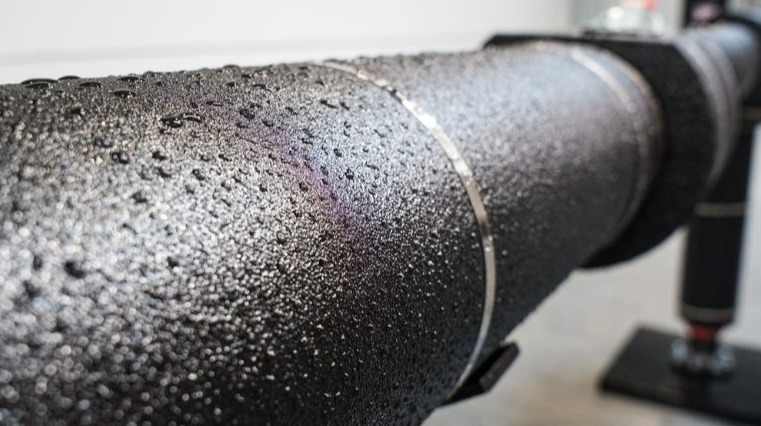
Each component consists of a rigid closed-cell insulation core fully sealed encapsulation within a seamless polyurea shell. This design creates a continuous barrier that prevents liquids, vapors, and contaminants from reaching the pipe surface. By eliminating seams, mastics, and exposed insulation materials, the system reduces pathways for moisture intrusion and corrosion.

As a result, Dragon Jacket insulation provides a solution to problems commonly encountered in chemical processing plants.


Moisture and Chemical Resistance

Moisture intrusion is one of the primary causes of insulation failure in chemical facilities.

Dragon Jacket insulation uses a continuous polyurea shell that forms a waterproof barrier around the insulation core. This protective outer layer resists water, oils, and many industrial chemicals while preventing the insulation from absorbing liquids.

Because the system does not rely on tapes, mastics, or field-applied coatings to maintain protection, there are fewer potential failure points where moisture can enter the insulation system.  This design helps maintain insulation performance in environments where traditional materials can degrade due to repeated washdowns, spills, or high humidity.


CUI Prevention by Design

Corrosion under insulation occurs when moisture becomes trapped between insulation and the pipe surface. Once moisture penetrates an insulation system, corrosion can develop beneath the insulation layer and progress undetected for long periods of time.

Encapsulated insulation systems help mitigate this risk by preventing moisture from reaching the pipe surface in the first place. When the pipe remains dry, corrosion conditions are significantly reduced.

Dragon Jacket insulation also allows sections to be removed for inspection and reinstalled afterward, enabling maintenance teams to verify pipe condition without destroying the insulation system.


Dimensional Stability Under Thermal Stress

Chemical plant operations often involve wide temperature ranges and frequent thermal cycling.

Dragon Jacket insulation uses a closed-cell insulation core designed to maintain stable thermal performance across a wide operating range. The material provides approximately R-6.25 per inch of insulation thickness and supports operating temperatures from −60°F to +350°F.

Maintaining consistent insulation performance helps stabilize pipe temperatures, which supports:

  • Reliable process control
  • Reduced heat loss or heat gain
  • Stable fluid viscosity for temperature-sensitive chemicals

In processes involving high-viscosity fluids, maintaining pipe temperature is particularly important to ensure that materials remain pumpable throughout the piping system.


Built for Maintenance-Intensive Facilities

Routine inspection and maintenance are unavoidable in chemical processing facilities. Traditional insulation systems are often damaged during maintenance activities, requiring insulation to be removed and replaced after work is completed.

Dragon Jacket insulation components are designed to be removed and reinstalled repeatedly without damaging the insulation system. When access is required for valves, strainers, pumps, or couplings, maintenance teams can:

  • Remove the securing bands or fasteners
  • Lift off the insulation section
  • Perform the required maintenance
  • Reinstall the same insulation component

This reduces material waste, lowers maintenance costs, and shortens downtime during inspections or repairs.


Faster Installation, Fewer Variables

Dragon Jacket insulation systems are manufactured from 3D scans or engineering drawings that match the exact geometry of pipes and equipment. Because the components arrive prefabricated, installation is straightforward:

  • Position the clamshell insulation over the pipe or fitting
  • Secure the section using steel bands or approved fasteners

The system does not require field-applied coatings, cladding fabrication, or specialized insulation tools. Installation can typically be performed by standard maintenance crews using basic equipment.

Prefabricated insulation also reduces installation variability and jobsite waste compared to traditional insulation systems that require cutting and fitting materials on site.


DJI: Delivering Long-Term Value in High-Risk Environments

Chemical processing plants require insulation systems that can withstand environmental exposure, mechanical stress, and repeated maintenance activity. Durable insulation systems can deliver long-term operational value through:

  • Extended service life in harsh industrial environments
  • Reduced risk of corrosion under insulation
  • Lower insulation maintenance and replacement costs
  • Stable thermal performance over decades
  • Improved process reliability for temperature-sensitive fluids

Dragon Jacket insulation supports these goals by combining moisture protection, mechanical durability, and consistent thermal performance in a single encapsulated system.

When corrosion, insulation failures, or process temperature instability affect reliability at a chemical processing facility, it may be time to evaluate alternatives to traditional insulation systems. Dragon Jacket insulation provides a corrosion-resistant, moisture-protected solution designed for demanding industrial environments.

Contact Dragon Jacket Insulation today to discuss your application, request engineering specifications, or evaluate insulation solutions designed to support long-term reliability in chemical processing operations.

Polyurea Encapsulation: What It Means for Industrial Insulation

By Durability, Industrial InsulationNo Comments

Traditional industrial insulation systems rely on multiple layers to protect pipes, tanks, and other equipment. Typically, fibrous insulation such as fiberglass or mineral wool is wrapped around a pipe or fitting, covered with thin metal jacketing, and sealed with tapes or mastics. This assembly is fabricated in the field to accommodate pipes, fittings, valves, and tanks of varying geometries.

While familiar and common, this layered approach introduces inherent vulnerabilities. Each material has its own failure mode, and every seam, fastener, and field-applied seal becomes a potential entry point for moisture, UV exposure, or mechanical damage.

Even when installed carefully, multi-layer insulation systems often degrade over time. Seams open. Jacketing dents or separates. Tapes and mastics weather and lose adhesion. The result? Moisture intrudes, thermal performance declines, and insulation must eventually be removed and replaced.

Dragon Jacket Insulation (DJI) takes a fundamentally different approach by using monolithic polyurea encapsulation.

Instead of assembling multiple materials in the field, each Dragon Jacket insulation section is manufactured as a single, fully encapsulated component, combining insulation and protection into one engineered unit. This approach is designed to reduce failure points, improve durability, and support long-term performance in exposed industrial environments.


The Limitations of Multi-Layer Insulation Systems

Conventional insulation systems were not developed for long service life in harsh outdoor or industrial conditions. Their construction method creates predictable weaknesses that drive maintenance and replacement.

1. Moisture Intrusion

Fiberglass and mineral wool readily absorb water once jacketing or vapor barriers are compromised. Saturated insulation loses thermal effectiveness and can trap moisture against the pipe surface, increasing the risk of corrosion under insulation (CUI).

2. Jacketing Degradation

Metal jacketing must be thin enough to be formed around complex shapes, which also makes it susceptible to dents, tears, and deformation. Over time, seams loosen and fasteners shift. Once compromised, jacketing allows water to enter but provides limited means for the system to dry.

3. UV and Environmental Exposure

Sunlight and weather degrade mastics, tapes, and coatings. Even high-quality field-applied sealants can lose integrity after prolonged UV exposure, leaving insulation assemblies vulnerable well before their expected lifespan.

4. Field Fabrication Variability

Because traditional insulation is cut and assembled on site, quality depends heavily on installer technique and conditions. Inconsistent cuts, imperfect seams, and variable sealing introduce uncertainty, making long-term performance difficult to predict or verify.

Layered insulation can perform acceptably in controlled indoor environments. In outdoor, industrial, or high-exposure applications, however, these systems often deteriorate quickly under moisture, vibration, impact, and repeated maintenance access.


What Polyurea Encapsulation Changes

Dragon Jacket uses factory-applied polyurea encapsulation to address the failure mechanisms inherent in multi-layer insulation systems. This is not a field-applied coating or mastic; it is a controlled manufacturing process that creates a unified insulation component.

Encapsulated, Continuous Protection

The polyurea shell is molded directly around the insulation core, forming a continuous protective barrier. This eliminates many of the seams, overlaps, and field-applied joints that typically allow moisture intrusion in traditional systems.

Moisture Resistance by Design

Polyurea is highly resistant to water exposure. When combined with a closed-cell insulation core, the encapsulated system is designed to limit moisture ingress and prevent water absorption under normal service conditions, helping maintain insulation performance and reduce CUI risk.

Resistance to UV and Mechanical Damage

Unlike thin metal jacketing, polyurea does not dent or separate at seams. It is formulated to resist UV exposure, routine jobsite contact, vibration, and freeze–thaw cycling, helping the insulation retain its protective function over time.

Dimensional Stability

The rigid closed-cell core provides structural support in addition to thermal resistance. This helps the insulation maintain thickness and geometry through thermal cycling, rather than sagging, shrinking, or settling.

Simplified Installation and Reduced Rework

Because Dragon Jacket insulation components are prefabricated to exact dimensions, installation does not require cutting, sealing, or jacketing in the field. Components are installed as clamshell sections and secured mechanically, reducing installation time and eliminating many sources of rework.

Reuse During Maintenance

Encapsulated insulation sections are designed to be removed and reinstalled during inspection or maintenance without destroying the insulation. This allows access to equipment without triggering repeated insulation replacement.


Long-Term Value of Encapsulation

By reducing moisture intrusion, limiting mechanical damage, and eliminating field-fabricated weak points, polyurea encapsulation supports longer service life and more predictable insulation performance. In outdoor and industrial environments, Dragon Jacket installations have demonstrated extended durability when properly specified and installed. Over time, this approach can result in:

  • More consistent R-value retention
  • Reduced insulation-related maintenance
  • Lower risk of moisture-driven failures
  • Less waste from repeated replacement
  • Improved protection of underlying piping and equipment

Actual lifecycle savings vary by application, exposure, and access frequency, but facilities often experience meaningful reductions in insulation maintenance and replacement activity compared to traditional systems.


Built Once. Built Right. Built for Long-Term Service.

In the Dragon Jacket system, polyurea encapsulation is the foundation of our design. By replacing layered assemblies and field-applied sealants with a unified, factory-controlled insulation component, Dragon Jacket Insulation offers a more reliable approach to protecting industrial systems over time.

For facilities seeking insulation that performs predictably, supports maintenance access, and reduces long-term operating costs, polyurea encapsulation provides a practical alternative to conventional insulation methods.

Contact Dragon Jacket Insulation to request specifications, discuss your application, or schedule a consultation to determine whether encapsulated insulation is appropriate for your system.

Grooved Piping Insulation Solutions: How Dragon Jacket Maintains Serviceability

By Industrial Insulation, Insulation Solutions, Vic™ Style FittingsNo Comments

Industrial piping systems continue to evolve, with fittings becoming more compact, modular, and maintenance-friendly. Grooved mechanical piping systems — such as those with Victaulic®-style couplings and comparable products from other manufacturers — have reshaped how engineers design, install, and service pipe networks.

These fittings are valued for their speed of installation, pressure reliability, flexibility in system design, and ease of maintenance. They are now widely used across municipal water and sewer main systems, industrial plants, data centers, and infrastructure projects.

However, one persistent challenge remains: how to insulate grooved fittings effectively without creating gaps, moisture issues, or maintenance problems commonly associated with traditional insulation methods.

Dragon Jacket Insulation (DJI) was engineered to address that challenge through custom-fit, prefabricated insulation components designed specifically for grooved couplings, elbows, and mechanical joints.

The Challenge of Insulating Grooved Fittings

Grooved fittings provide clear mechanical advantages; they are secure, installed easily and quickly, and can be reconfigured. However, their geometry makes them difficult to insulate using conventional materials. Standard insulation systems rely on flat or flexible materials that must be cut, shaped, and assembled in the field — an approach that performs poorly around couplings, bolts, and grooves. Common issues include:

  • Inconsistent fit and air gaps around irregular shapes
  • Excessive cutting and shaping during installation
  • Moisture intrusion through seams, tape, and sealants
  • Compression of fiberglass or mineral wool under banding pressure
  • Metal jacketing that dents or separates at the coupling
  • Rework or full replacement after maintenance access

Even when field-fabricated insulation looks acceptable at installation, it often degrades quickly once exposed to weather, vibration, and maintenance activity. Moisture intrusion leads to reduced R-value, condensation, and, over time, corrosion under insulation (CUI).

The limitation is not the grooved fitting; it is the insulation system surrounding it.

A Precision Approach, Not Patchwork

Dragon Jacket Insulation was designed to complement the performance and serviceability advantages of grooved piping systems. Instead of assembling multiple materials in the field, DJI provides single-piece, rigid insulation components manufactured specifically for each fitting.

1. Precision Fit Through Prefabrication

Dragon Jacket components are precision manufactured using 3D modeling that accounts for the complex geometry of grooved couplings and fittings. This approach allows each insulation section to fit consistently without compression, gaps, or on-site guesswork.

2. Moisture-Resistant Construction

Each DJI component consists of a closed-cell insulation core encapsulated in a factory-applied polyurea shell. This construction is designed to resist moisture exposure and environmental degradation under typical service conditions, helping maintain insulation performance and reduce CUI risk. The encapsulated design also provides resistance to:

  • UV exposure
  • Mechanical impact and vibration
  • Freeze–thaw cycling
  • Common industrial washdowns

3. Single-Piece Clamshell Design

DJI’s grooved fitting insulation components are manufactured as rigid clamshell sections that install around the fitting without field fabrication. There are no metal jackets to form, no tape or sealants to apply, and no multi-layer assemblies that can shift over time.

4. Faster, More Predictable Installation

Installation involves positioning the clamshell section around the fitting and securing it with bands. Because components arrive ready to install, labor time is significantly reduced compared to traditional insulation methods that require cutting, shaping, and sealing on-site.

This streamlined process improves schedule predictability and reduces reliance on specialized insulation subcontractors for complex fittings.

Designed to Support Maintenance Access

Grooved fittings are often selected because they simplify inspection and maintenance. Traditional insulation can undermine that advantage by being damaged or destroyed during access.

Dragon Jacket Insulation sections are designed to be removed and reinstalled without damaging the insulation or compromising fit. For maintenance teams, this means:

  • Clean removal for inspection or service
  • Preservation of insulation geometry
  • Reinstallation without patching, replacement, or specialized subs
  • Reduced labor during repeat access

This reuse capability helps maintain insulation performance over time while avoiding repeated re-insulation work.

Long-Term Performance for Modern Piping Systems

Because Dragon Jacket Insulation components are custom-fit, moisture-resistant, and dimensionally stable, they are well suited for outdoor and exposed grooved piping installations. When properly specified and installed, DJI systems have demonstrated long service life in industrial and municipal environments.

Additional benefits include:

  • Consistent R-value over time
  • Reduced moisture-related degradation
  • Lower maintenance-related insulation costs
  • Improved protection of underlying piping systems to prevent CUI
  • A cleaner, more professional appearance over the life of the installation

By aligning insulation performance with the serviceability of grooved fittings, Dragon Jacket Insulation helps ensure that the advantages of modern piping systems are fully realized.

Insulation Engineered for Grooved Systems

Grooved mechanical fittings have transformed how piping systems are installed and maintained. Dragon Jacket’s grooved fitting insulation solutions are designed to complement that innovation with equal emphasis on precision, durability, and serviceability.

If your current insulation struggles to keep up with grooved fittings — causing delays, rework, or premature failure — it may be time to evaluate an insulation system engineered specifically for these applications.

Contact Dragon Jacket Insulation to request specifications, discuss your project, or schedule a consultation or product demonstration to determine whether a custom-fit grooved piping insulation solution is right for your system.

Trade-Friendly Engineering: Insulation Designed to Speed Up Installation and Protect Project Schedules

By Insulation SolutionsNo Comments

For industrial, municipal, and infrastructure projects, schedule certainty is often the difference between a project that stays on budget and one that does not. EPC firms are under constant pressure to compress timelines, coordinate multiple trades, and bring systems online as quickly as possible.

For facility owners, whether municipal, utility, or industrial, construction downtime directly affects operations, service continuity, and public trust. When a project depends on multiple subcontractors working in sequence, even small delays can cascade across the schedule. Missed handoffs, weather interruptions, and rework can quickly turn insulation, often considered a late-stage task, into a critical-path risk.

Dragon Jacket Insulation (DJI) was engineered to remove insulation from that risk equation.

Why Traditional Insulation Works Against the Clock

Insulation is one of the most schedule-sensitive trades on a jobsite. Traditional systems like fiberglass, mineral wool, and elastomeric foam require extensive field fabrication by specialized insulation contractors. Installation typically begins only after piping and fittings are complete, and progress depends heavily on jobsite conditions and installer availability.

In practice, this introduces uncertainty at multiple points:

  • Dependence on insulation subcontractor availability and sequencing
  • Variability in field measurements and fabrication quality
  • Time-intensive cutting, wrapping, and sealing of fittings and valves
  • Weather delays affecting adhesives, coatings, and jacketing
  • Rework caused by dented or misaligned metal cladding
  • Complex geometries that require custom field fabrication
  • Additional steps to accommodate future maintenance access
  • Inspection delays when deficiencies must be corrected

Even on smaller projects, these factors can compound. On large outdoor systems, they frequently push insulation onto the critical path where delays affect every downstream trade.

How Prefabricated Dragon Jacket Insulation Reclaims Time

Dragon Jacket Insulation replaces field fabrication with prefabricated, custom-fit insulation components designed for predictable, repeatable installation. By shifting work off the jobsite and into controlled manufacturing, DJI reduces schedule variability and installation time.

Because DJI components are produced from project schematics or 3D measurement, insulation can be fabricated in parallel with piping installation rather than waiting until the system is complete. Once piping and fittings are ready, insulation can be installed immediately without cutting, shaping, or sealing in the field.

Each DJI insulation section is manufactured in advance using:

  • Project schematics or 3D measurement
  • Digital modeling for precise geometry
  • Single-piece clamshell construction
  • Factory-applied polyurea encapsulation
  • Rigid closed-cell insulation cores

The result is a system that arrives ready to install, with predictable fit and no jobsite fabrication surprises.

Installation is straightforward: installers position the clamshell section around the pipe or component, secure it with stainless steel bands, and move on. No adhesives, coatings, curing time, or sheet-metal work are required. This simplicity allows insulation work to proceed with minimal training and reduces reliance on specialty subcontractors.

In many applications, this approach significantly shortens installation time compared to traditional insulation systems, helping teams remove bottlenecks from the construction schedule.

Predictability for Project Managers and Inspectors

Prefabricated DJI insulation also improves inspection efficiency. Because each section is rigid and dimensionally consistent, it is immediately apparent whether insulation is properly installed — even in elevated or hard-to-access areas. There are no hidden seams, crushed insulation, or patched jackets to evaluate.

For project managers, this predictability translates into:

  • Fewer inspection delays
  • Less rework due to fabrication errors
  • Clearer installation verification
  • More reliable scheduling

Insulation That Isn’t Weather Dependent

Dragon Jacket Insulation sections consist of a closed-cell foam core fully encapsulated in a factory-applied polyurea shell. The encapsulated design is intended to resist moisture exposure, UV radiation, and routine jobsite contact.

Because installation does not rely on adhesives, coatings, or field-applied sealants, insulation work can continue in a wider range of conditions including rain, cold, heat, or high humidity when traditional system installation may need to stop.

Once installed, the encapsulated construction helps protect the insulation from:

  • Rain and snow exposure
  • High humidity
  • UV degradation
  • Impact from tools or foot traffic

This durability supports schedule continuity during construction and reduces the likelihood of early damage requiring repair.

Designed for Access Without Rework

Another scheduling advantage emerges after installation. Traditional insulation often must be cut away and discarded to allow access for inspection or adjustments. DJI insulation sections are designed to be removed and reinstalled without damaging the insulation or compromising fit.

This allows construction teams to:

  • Access valves, fittings, and couplings during commissioning
  • Make adjustments without triggering re-insulation work
  • Reinstall the same insulation components after access

Over the life of the system, this approach can reduce repeated insulation work and associated labor, waste, and delays.

Take Insulation Off the Critical Path

By eliminating field fabrication, reducing reliance on specialty subcontractors, and enabling predictable installation, Dragon Jacket Insulation helps remove insulation from the list of schedule risks.

For water districts, industrial facilities, and EPC contractors delivering time-sensitive projects, this means:

  • Faster installation with fewer dependencies
  • Reduced rework and inspection delays
  • Greater confidence in project sequencing
  • Cleaner, safer jobsites
  • More predictable project delivery

If insulation is introducing uncertainty into your construction schedule, it may be time to evaluate a system designed to support, not complicate, project execution.

Contact Dragon Jacket Insulation to request specifications, discuss your application, or schedule a product demonstration. When schedules matter, trade-friendly insulation can make the difference between staying on track and falling behind.

Minimal Maintenance Required: Why Dragon Jacket Insulation Stands Out

By Industrial Insulation, Insulation, Insulation Solutions, ReusabilityNo Comments

Across industrial and municipal environments, maintenance teams face a common reality: traditional insulation rarely survives routine inspection, repair, or system modification. Whether insulating chilled water lines, valves, tank connections, or bridge-mounted piping, conventional insulation systems often require repeated patching, rewrapping, recoating, or full replacement after access is required.

Fiberglass, mineral wool, and metal jacketing can perform adequately when newly installed and undisturbed. But most were not designed with frequent maintenance access or long-term reuse in mind. Once insulation is removed, cut, or damaged — and once moisture enters through a tear or compromised seam — performance degrades quickly and replacement becomes inevitable.

Dragon Jacket Insulation was engineered to address this long-standing maintenance challenge. Its moisture-resistant construction and reusable design are intended to reduce repeated re-insulation cycles, simplify maintenance access, and lower long-term labor and material costs.

Here’s how.

How Traditional Insulation Drives Maintenance Work

Industrial insulation plays a critical role in maintaining process temperatures and protecting piping and equipment. However, many conventional insulation systems increase maintenance burden because of how they are constructed and installed.

Traditional systems rely on flexible, generic insulation materials that are cut and fitted in the field, then protected with thin metal jacketing. In real-world service, this approach introduces several predictable maintenance challenges:

  • Moisture sensitivity: Fiberglass and mineral wool readily absorb water once jackets or vapor barriers are compromised, leading to loss of R-value and prolonged drying or replacement.
  • Jacketing damage: Metal cladding dents, cracks, or separates at seams due to foot traffic, tools, weather exposure, or vibration, creating entry points for rain and condensation.
  • Field-fabricated weak points: Seams, joints, and patches created during installation or repair are difficult to reseal reliably over time.
  • Limited reuse: Once insulation is removed for inspection or maintenance, it rarely goes back on with the same fit, thickness, or integrity.

As a result, insulation often becomes a recurring maintenance expense rather than a long-term asset. The more frequently systems are opened for inspection, repair, or reconfiguration, the more often insulation must be repaired or replaced.

How Dragon Jacket Was Designed to Reduce Maintenance

Dragon Jacket is not simply an alternative insulation material, it is an engineered system designed to reduce the failure mechanisms that make conventional insulation maintenance-intensive.

Each Dragon Jacket section is manufactured as a rigid, single-piece clamshell with a closed-cell insulation core encapsulated in a factory-applied polyurea shell. This construction is intended to improve durability, dimensional stability, and reusability in exposed industrial environments.

Moisture-Resistant Construction

The encapsulated design is engineered to resist moisture ingress under typical service conditions. By limiting water absorption and protecting the insulation core from exposure, Dragon Jacket helps reduce moisture-related degradation and corrosion under insulation (CUI) risks associated with saturated fibrous materials.

Resistance to Impact and Environmental Exposure

Unlike thin metal jacketing, the polyurea outer shell is designed to tolerate routine jobsite contact, vibration, UV exposure, and temperature cycling without denting or separating at seams. This helps the insulation retain its shape and protective function over time.

Dimensional Stability Without Settling or Sagging

The rigid closed-cell core provides structural support in addition to thermal resistance. Because the insulation does not rely on loose fibers or soft materials, it is less susceptible to settling, compression, or deformation that can occur in vibration-prone environments.

Designed for Removal and Reinstallation

Traditional insulation often becomes waste once maintenance access is required. Dragon Jacket was engineered to be removed and reinstalled without damaging the insulation or compromising fit. Maintenance crews can:

  • Remove the securing bands
  • Remove the insulation section
  • Perform inspection or repair
  • Reinstall the same insulation component

This approach helps reduce repeated fabrication, disposal, and replacement of insulation around valves, fittings, strainers, pumps, couplings, and tank nozzles, including grooved and flanged components.

Fewer Maintenance Touchpoints Over the Life of the System

By reducing moisture-related failures, deformation, and damage during access, Dragon Jacket can significantly reduce how often insulation must be repaired or replaced. In outdoor and exposed applications including rooftops, pipe racks, bridges, and coastal environments, Dragon Jacket installations have demonstrated long service life when properly specified and installed.

Over time, fewer insulation touchpoints can translate to:

  • More consistent thermal performance
  • Reduced labor associated with re-insulation
  • Fewer moisture-driven failures
  • Lower risk of CUI
  • Improved predictability in maintenance planning

Actual savings will vary by application, environment, and access frequency, but reducing repeated insulation replacement can meaningfully impact long-term operating costs.

Insulation That Simplifies Maintenance, Not Complicates It

Maintenance will always be a critical part of industrial operations. However, the insulation surrounding pipes and equipment does not need to add unnecessary cost, delay, or uncertainty to that work.

By maintaining fit, resisting moisture intrusion, and allowing reuse during inspection and repair, Dragon Jacket Insulation is designed to shift insulation from a recurring maintenance problem to a long-term system component.

If your current insulation requires frequent repair, replacement, or patching after maintenance access, it may be time to evaluate an alternative designed for long-term service. Contact Dragon Jacket Insulation to request specifications, discuss your application, or schedule a consultation to determine whether a reusable, maintenance-friendly insulation system is the right fit for your facility.

Dimensional Stability: Maintaining Fit and R-Value Under Mechanical and Environmental Stress

By Durability, Insulation, Insulation SolutionsNo Comments

Industrial insulation isn’t just about selecting the right R-value; it’s about maintaining that R-value over time. Nearly all insulation materials perform adequately on day one. The real test comes years later, after thousands of thermal cycles, multiple freeze–thaw seasons, and repeated maintenance access.

Unfortunately, traditional insulation systems — fiberglass, mineral wool, and elastomeric foam with metal jacketing — often fail that long-term test in harsh conditions. They shrink, swell, tear, warp, deform, absorb moisture, and gradually lose their ability to maintain a tight fit and consistent thermal performance.

That’s why dimensional stability is one of the most overlooked yet most critical attributes of any industrial insulation system.

Dragon Jacket Insulation was engineered specifically to resist the forces that degrade conventional insulation. Through its rigid closed-cell structure, polyurea encapsulation, and single-piece construction, it maintains its shape, fit, and insulating properties even under extreme environmental and mechanical stress.

Here’s why that matters — and what makes Dragon Jacket different.

Why Traditional Insulation Loses Shape

Traditional insulation systems are not designed to maintain dimensional stability under real-world industrial conditions. They rely on flexible, generic materials that are cut, wrapped, and jacketed in the field rather than structurally supported or custom-fit. Over time, this approach leads to predictable loss of shape, fit, and thermal performance.

1. Jacketing Deformation Under Mechanical Stress

Thin metal jacketing dents, cracks, and deforms under foot traffic, tools, weather, and routine maintenance. Once deformed, the jacket no longer holds the insulation in its intended shape, opening pathways for moisture intrusion and allowing the insulation beneath to shift and collapse.

2. Insulation Settling from Vibration and Gravity

Fiberglass and mineral wool have no inherent structural rigidity. Continuous vibration from pumps, flow, and equipment causes these fibrous materials to settle over time, thinning at the top of pipes and fittings and creating gaps that reduce R-value and promote condensation.

3. Shape Loss During Maintenance and Service

Traditional insulation systems are not designed for removal and reuse. During inspections or maintenance, insulation is cut away or pulled back and rarely returns to its original shape or thickness. Each removal cycle introduces further deformation, misalignment, and gaps, frequently leading to full insulation replacement.

When insulation loses its shape, it loses its function. Poor fit leads to thermal bridging, moisture intrusion, condensation, and corrosion under insulation (CUI), accelerating asset damage and shortening system life.

How Dragon Jacket Maintains Dimensional Stability

Dragon Jacket was engineered specifically to maintain dimensional stability under the mechanical and environmental stresses that cause traditional insulation to lose shape. Its performance is driven by three core engineering principles.

1. Rigid Closed-Cell Core

Unlike soft, fibrous, or elastomeric insulation materials, Dragon Jacket uses a rigid, closed-cell foam core that provides structural support as well as thermal resistance. The closed-cell structure resists water ingress and prevents moisture-related compression or collapse. Under normal industrial loads and environmental exposure, the core maintains its shape and thickness, allowing the insulation to retain consistent R-value over time.

2. Polyurea-Encapsulated Outer Shell

Each Dragon Jacket section is encapsulated in a durable, factory-applied polyurea shell that protects the insulation core from external forces. The polyurea exterior is designed to resist:

  • UV exposure
  • Temperature cycling
  • Mechanical impact and vibration
  • Chemical exposure
  • Freeze–thaw conditions

Unlike thin metal jacketing, the polyurea shell does not dent or permanently deform under typical jobsite contact. By maintaining structural continuity around the insulation core, the shell helps prevent the expansion, separation, and warping commonly seen in multi-layer insulation systems.

3. Precision Fit Through Prefabrication

Dragon Jacket components are prefabricated to match the geometry of each pipe, valve, or fitting, often using 3D scanning measurements or project schematics. This precision fit creates a rigid, form-matched assembly that stays aligned with the insulated surface rather than relying on field adjustment to maintain contact. Because the insulation is dimensionally stable and custom-fit, there is:

  • No drifting
  • No sagging
  • No gradual creep
  • No variability introduced by field fabrication

Why Dimensional Stability Matters for R-Value

Insulation only performs as intended when it maintains consistent thickness and continuous surface contact. Even small gaps, compression points, or areas of separation can significantly reduce effective R-value. When insulation shifts, shrinks, or deforms over time, it creates predictable performance failures:

  • Gaps that allow unwanted heat gain or heat loss
  • Condensation pathways along exposed surfaces
  • Conditions that support microbial growth
  • Trapped moisture that accelerates corrosion under insulation (CUI)
  • Increased energy demand on chillers, heaters, and pumps

Dragon Jacket maintains its geometry over decades of service, allowing its R-value to remain stable for the life of the system. Rather than degrading year after year, the insulation delivers consistent thermal performance over time, providing the same level of protection after thousands of operating cycles as it does at initial installation.

Stability Under Stress: Designed for Exposed Conditions

Dragon Jacket is engineered to maintain dimensional stability in environments that commonly degrade conventional insulation systems over time, including:

  • Repeated freeze–thaw cycles in cold climates
  • Prolonged UV exposure in high-sun environments
  • Coastal installations exposed to salt spray and humidity
  • Industrial settings with routine chemical washdowns
  • Vibration from pumps, flow, and rotating equipment
  • Elevated pipe racks and bridge-mounted piping
  • Areas subject to regular maintenance access and foot traffic

In these conditions, traditional insulation systems often lose shape due to jacketing deformation, insulation settling, moisture intrusion, or damage during maintenance. Dragon Jacket’s rigid, encapsulated construction is designed to resist these mechanisms, helping the insulation maintain thickness, alignment, and surface contact over time.

As a result, Dragon Jacket has demonstrated long service life in outdoor and high-exposure applications, with installations routinely remaining in service for 20 years or more when properly specified and installed.

Built to Maintain Shape, Fit, and Performance

Dimensional stability is not an added feature; it is a foundational requirement for long-term insulation performance. When insulation maintains its shape and fit, it is better able to preserve R-value, limit moisture intrusion, and protect underlying equipment from corrosion under insulation (CUI).

By combining a rigid closed-cell core with a durable, moisture-resistant outer shell and prefabricated fit, Dragon Jacket is designed to remain stable through repeated thermal cycles, environmental exposure, and decades of maintenance activity.

If your existing insulation shifts, sags, or degrades over time, it may indicate a system that was not designed for long-term dimensional stability. Dragon Jacket offers an engineered alternative intended to reduce rework, extend service life, and convert insulation from a recurring maintenance issue into a long-term asset.

20-Year Life Expectancy: Durable Industrial Insulation for Harsh Conditions

By Durability, Industrial Insulation, Infrastructure, Insulation SolutionsNo Comments

In industrial and municipal systems that transport fluids and gases, insulation serves as the first line of defense against weather exposure, temperature extremes, mechanical impact, and corrosion. Yet many traditional insulation systems like fiberglass, mineral wool, and elastomeric foams often fail well before their expected service life.

In exposed applications, UV and environmental degradation can appear within just a few years. Impact damage and weathering can tear protective jackets, allowing moisture intrusion that degrades insulation and accelerates corrosion under insulation (CUI).

The result is a costly, repetitive maintenance cycle.

Dragon Jacket Insulation was engineered to break that cycle, delivering a true 20-year service life even in harsh outdoor environments. Rather than lasting a few seasons, Dragon Jacket is built for decades of consistent thermal performance and long-term equipment protection.

Why Traditional Systems Don’t Last

Traditional insulation systems rely on generically designed insulation materials that must be cut and configured on-site to accommodate a wide range of pipe and fitting geometries. Installers wrap these materials around equipment as best they can, using tape, straps, and sealants to hold everything in place. The only protection for the soft, pliable insulation is typically a thin metal jacket made of tin or aluminum. As a result, these systems are subject to several predictable failure modes:

  • Moisture intrusion from rain, snow, humidity, and condensation
  • UV exposure that degrades and weakens metal jacketing and sealants
  • Mechanical damage from tools, equipment, animals, or weather
  • Thermal cycling that stresses insulation and jacketing as pipes expand and contract
  • Damage during inspection, maintenance, or system reconfiguration that requires full replacement

Fiberglass and mineral wool readily absorb water, becoming heavier and losing R-value as soon as moisture intrudes. Metal jacketing dents, separates at seams, and traps moisture once compromised. And because these systems depend on field fabrication (cutting, taping, and sealing irregular shapes), every joint becomes a potential failure point. Given these inherent vulnerabilities, it’s not surprising that traditional insulation systems rarely achieve their advertised service life.

Dragon Jacket is Built for Decades

Dragon Jacket is not simply a “newer, better” insulation material. It is a fully engineered insulation system designed to outperform traditional insulation in critical performance areas. Its long service life is driven by a combination of material science, monolithic design, and precision manufacturing.

1. Factory-Applied Polyurea Encapsulation

Each insulation section is fully encapsulated in a rugged polyurea shell that is:

  • 100% moisture-impermeable
  • UV-resistant
  • Impact-resistant
  • Designed to withstand freeze–thaw cycling
  • Stable across extreme temperature ranges

Unlike metal jacketing, this shell does not dent, crack, corrode, or separate at seams. The result is a continuous moisture barrier with no pathways for water intrusion and no corrosion under insulation (CUI).

2. Closed-Cell, High-R-Value Core

Dragon Jacket’s rigid closed-cell foam core maintains its structure and thermal performance over decades of exposure. It does not wick, absorb, or trap water, allowing its R-value to remain stable and protect equipment from energy loss and thermal stress.

3. Single-Piece Construction with No Weak Points

Every insulation section is manufactured as a single-piece clamshell, tailored to the exact geometry of each pipe, valve, or fitting using 3D modeling or project schematics. With no field-fabricated jackets and no seams to seal on-site, the system eliminates the failure points that cause traditional insulation to degrade prematurely. Custom fit also reduces labor hours during both initial installation and reinstallation.

4. Built to Be Reused, Not Replaced

Maintenance is unavoidable, but repeated insulation replacement is not. Dragon Jacket sections can be removed, set aside, and reinstalled in minutes without damaging the insulation or compromising the moisture barrier. This reuse capability extends the service life of both the insulation system and the equipment it protects.

Proven Performance in Harsh Environments

Dragon Jacket is engineered to perform in the types of environments where traditional insulation systems routinely fail:

  • Coastal facilities exposed to salt spray and high humidity
  • Arctic and mountain climates with deep freeze conditions and snow loads
  • Desert environments with intense UV exposure and rapid temperature swings
  • Municipal water systems subject to weather exposure and foot traffic
  • Industrial plants with frequent washdowns, vibration, and mechanical activity

In applications where fiberglass-and-metal insulation often degrades within one to two years, Dragon Jacket routinely delivers 20+ years of stable performance. This longevity is not theoretical; it is supported by field performance, impact testing, environmental testing, and long-term installations across North America.

The Value of a 20-Year Life Expectancy

Long-lasting insulation is not just a durability advantage, it is an economic one. An insulation system designed to last more than two decades delivers:

  • Lower total cost of ownership
  • Fewer shutdowns for re-insulation
  • Elimination of recurring replacement cycles
  • Reduced labor costs and material waste
  • Long-term protection of underlying equipment against corrosion under insulation (CUI)

The result is a smarter investment for municipalities, EPC contractors, engineering firms, and facility owners seeking predictable, long-term performance.

Built to Last. Engineered to Protect.

Dragon Jacket’s 20-year service life is not a marketing claim, it is the result of deliberate engineering. Moisture-impermeable materials, precision manufacturing, and reusable construction combine to create an insulation system that outperforms traditional solutions across critical performance metrics.

If repeated insulation failure has become an accepted cost of operations for your business, it may be time to consider a system designed for decades of service. Contact Dragon Jacket Insulation to request specifications, discuss your application, or schedule a project consultation.

BABAA-Compliant Industrial Insulation Manufactured in the USA

By Features and Benefits, Industrial Insulation, Insulation SolutionsNo Comments

Public infrastructure owners, EPC contractors, and municipalities across the United States are increasingly required to specify American-made materials. Federal initiatives such as the Build America, Buy America Act (BABAA) prioritize domestically manufactured components for water infrastructure, energy projects, and other publicly funded systems.

For industrial insulation, BABAA compliance can be challenging due to overseas manufacturing, long supply chains, and limited U.S.-based specialty products. Dragon Jacket Insulation addresses this challenge as a BABAA-compliant insulation system that is engineered, manufactured, and shipped entirely from Idaho, USA.

Meeting BABAA Requirements Without Compromise

The Build America, Buy America Act was established to strengthen domestic manufacturing and reduce reliance on foreign supply chains for federally funded infrastructure projects. To comply with BABAA, materials (including mechanical insulation for pipes, fittings, tanks, and equipment) must meet strict domestic manufacturing and sourcing requirements.

Many insulation products sold in the U.S. are partially or fully manufactured overseas. Dragon Jacket Insulation is different. It is a BABAA-compliant insulation system that is fully engineered and manufactured in the United States, providing a compliant alternative to imported fiberglass-and-metal insulation systems.

Made in Idaho: Precision Manufacturing for Harsh Environments

Dragon Jacket Insulation is manufactured in Post Falls, Idaho, using domestic labor, domestic materials, and U.S.-based production processes. The Idaho manufacturing facility integrates 3D modeling, precision fabrication, and polyurea encapsulation technologies under one roof.

Each Dragon Jacket insulation component is produced in the United States using:

  • Domestically sourced raw materials
  • American manufacturing labor
  • In-house quality control and inspection
  • Short, domestic supply chains

Manufacturing in the United States enables consistent quality control, shorter lead times, and reliable delivery for infrastructure projects operating under strict schedules.

Why Domestic Production Matters for Industrial Insulation

Domestic manufacturing provides measurable advantages for industrial insulation projects:

  • Shorter lead times due to U.S.-based production
  • Improved quality control through in-house manufacturing and inspection
  • Supply chain resilience independent of overseas shipping and port delays
  • Simplified BABAA compliance without import documentation or waiver requests

Built for the Infrastructure America Depends On

In addition to meeting BABAA requirements, Dragon Jacket Insulation is engineered for long-term performance in demanding industrial environments. Traditional fiberglass-and-metal insulation systems are prone to moisture intrusion, UV degradation, mechanical damage, and corrosion under insulation (CUI).

Dragon Jacket uses a single-piece, moisture-impermeable, polyurea-encapsulated clamshell design that installs faster, eliminates on-site fabrication, and can be removed and reinstalled without performance loss.

Built Here. Built Better. Built to Last.

Choosing Dragon Jacket Insulation supports U.S. jobs, American innovation, and the communities that depend on modern, reliable infrastructure. Every product built in Idaho represents local labor, local expertise, and local economic impact. And because our products last longer than traditional insulation, our stateside facilities spend less on replacements, waste disposal, and emergency repairs, keeping their budgets under control and maintaining the infrastructure and industrial plants that serve the public.

As BABAA requirements continue to shape U.S. infrastructure investment, Dragon Jacket Insulation offers a fully American-made, high-performance insulation system for pipes, fittings, tanks, and industrial equipment. Manufactured in Idaho and designed for decades of service, Dragon Jacket helps infrastructure owners meet compliance requirements while reducing long-term maintenance and replacement costs.

If your project requires Build America, Buy America Act–compliant materials, or if you simply want the best, most versatile, and toughest industrial insulation on the market, Dragon Jacket Insulation is ready to support you. Contact Dragon Jacket Insulation today to request specs, discuss a project, obtain a quote, or learn more about our products.

No Fibers. No Tin. No Sealants. A Better Way to Insulate Industrial Piping

By Features and Benefits, Insulation, Insulation SolutionsNo Comments

For decades, industrial insulation has relied on the same approach: fiberglass or mineral wool wrapped in thin metal jacketing, taped and sealed in the field. It’s a multi-layer system with inherent weaknesses: moisture intrusion, UV degradation, mechanical damage, and installation variability.

This traditional approach may be familiar, but it’s outdated, not just in materials, but in its ability to meet modern industrial demands. In harsh environments where thousands of feet of pipe, fittings, and equipment are exposed to weather, vibration, and ongoing maintenance, legacy fiberglass and tin systems simply don’t hold up.

Dragon Jacket Insulation was engineered to replace that system. No fibers, no tin, no sealants. Each insulation section is a single-piece, prefabricated, moisture-impermeable component, custom-fit for long-term performance with virtually no on-site fabrication and dramatically reduced failure points.

Out With the Old: Why Legacy Materials Fail

Fiberglass and mineral wool are effective insulation materials in interior, controlled environments, such as within the walls of residential or commercial buildings. They can conform to tight spaces and remain undisturbed for years. However, their soft, porous, and highly absorbent nature makes them poorly suited for exterior industrial applications.

Once exposed to moisture from rain, condensation, or washdowns, these materials lose thermal performance, compress under their own weight, and accelerate corrosion under insulation (CUI). The thin metal jacketing intended to protect them dents and tears easily, and once breached, traps moisture against the pipe.

In industrial settings, installation is also slow and labor-intensive. Every tank, valve, elbow, pipe, and fitting must be measured, cut, wrapped, taped, sealed, and jacketed by hand. Each step introduces potential failure points, and most insulation failures trace back to seams, joints, and field-fabricated details that fail to keep water out.

In other words, the weaknesses are baked into the design.

A New Approach: A Monolithic, Moisture-Proof System

Dragon Jacket takes a fundamentally different approach. Rather than layering multiple materials with multiple failure modes, it uses a single engineered system: a rigid, closed-cell insulation core fully encapsulated in a polyurea shell.

  • No fibers.
  • No jacketing.
  • No sealants.
  • No paths for water intrusion.

Each section is custom-manufactured using 3D measurement and produced as a single-piece clamshell precisely matched to the geometry of the pipe or fitting. From Victaulic® couplings and valves to bridge-mounted mains and expansion joints, every piece is designed to fit the application exactly.

This monolithic construction blocks moisture from every angle and maintains structural integrity long after traditional systems fail.

Fully Encapsulated, Completely Waterproof

The key to Dragon Jacket’s effectiveness lies in its outer shell. The polyurea exterior is:

  • 100% moisture-impermeable
  • UV-resistant
  • Impact-resistant
  • Chemically inert
  • Stable across extreme heat and subzero temperatures

Unlike metal jacketing, the shell does not dent, corrode, or degrade over time. It is designed to keep water out over decades of service, preventing the condensation and moisture intrusion that lead to corrosion under insulation (CUI). And because the insulation core is closed-cell, it cannot absorb water even if the outer shell is pierced, gouged, cut, or scraped during maintenance. The result is stable R-value, intact insulation, and long-term protection of the equipment underneath.

No Field Fabrication, Ever

Traditional insulation systems rely on installers to fabricate insulation for complex shapes in the field. Dragon Jacket eliminates that requirement.

Each component arrives prefabricated to fit the exact geometry of the pipe or fitting being insulated. Installation requires no cutting, taping, or sealing. Sections are simply clamshelled around the component and secured with steel bands or other approved fasteners. No mess, no specialty trades, and no weather-dependent fabrication.

Because each piece is rigid and durable, it can be removed for inspection and reinstalled without compromising performance — a capability that fiber and tin systems cannot provide.

A System Built for Real-World Industrial Conditions

Dragon Jacket’s fiberglass-free, tin-free design eliminates the issues industrial teams know too well: CUI, moisture, UV degradation, deformation, and repeated insulation replacement. Engineered for 20+ years of service in harsh environments, Dragon Jacket transforms insulation from an operating expense into a capital asset.

If your insulation system still relies on fiber, tin, and sealants, you’re fighting a losing battle against water, weather, and wear. Dragon Jacket offers a smarter, longer-lasting solution that installs faster and protects infrastructure as it should.

Contact Dragon Jacket Insulation to request a quote or demonstration and see the difference a no-fibers, no-tin, no-sealant system makes.

How 3D-Scanning Enables Precision Fitment of Prefabricated Insulation

By 3D Scanning, Industrial Insulation, Insulation SolutionsNo Comments

Ask a project manager or field installer what can often slow down insulation jobs, and one answer you’re likely to encounter is: fit issues.

Traditional industrial insulation materials—fiberglass, mineral wool, or elastomeric foam—are manufactured in standard dimensions. Typically, that means an insulation installer comes onto a site with a load of insulation and ancillary supplies to build and modify insulation on-site. Every valve, pipe, elbow, flange, or coupling has to be measured, cut, adjusted, sealed and jacketed by hand. It’s slow, inconsistent, and prone to error.

Dragon Jacket Insulation uses advanced 3D scanning and custom CAD manufacturing to create perfectly fitted, pre-fabricated insulation systems, completely eliminating on-site fit problems.

The Problems Inherent in Field-Fitted Insulation

Field-fitted insulation seems practical until you calculate the time, cost, and variability in performance that it introduces:

  • Manual measurement errors lead to gaps, overlaps, and inconsistent thicknesses.
  • Tight spaces and irregular geometries make installation difficult and prone to weaknesses.
  • Weather conditions—rain, cold, or heat—slow down crews and compromise adhesives and coatings.
  • Rework becomes inevitable when components don’t align.

Now, multiply these small inefficiencies across hundreds of fittings and valves and long piping runs: job estimates for time and labor stretch out, fit problems allow water intrusion, and the long-term cost grows exponentially through moisture damage and corrosion under insulation (CUI).

The Precision of 3D-Scanned Insulation

Dragon Jacket’s 3D scanning process changes that entirely. Using portable scanning technology, our team captures exact digital replicas of piping systems, including every dimension, curve, and fitting. From those scans, Dragon Jacket designs and manufactures custom-fit insulation sections that arrive ready to install with no field cutting or modification required.

Each piece is precision-molded with the correct wall thickness, integrated joints, and fastening points. It’s not an approximation; it’s a custom fit, every time.

From Scan to Installation

The process is straightforward:

  1. Scan the system: Dragon Jacket’s team or a trained partner performs a 3D scan of the piping, valves, or equipment that needs to be insulated. The scan captures millimeter-level detail, even in congested or complex areas. Alternatively, customers can send schematics.
  2. Engineer the design: Using the scanned data, our design team creates a digital model of the insulation system, ensuring the correct thickness, clearances, and access points for maintenance.
  3. Manufacture the components: Each insulation section is custom-fabricated to spec using Dragon Jacket’s closed-cell, high-R-value foam core and encapsulated in a seamless polyurea shell.
  4. Install with confidence: When the shipment arrives, installers, who do not need specialized tools or training, simply clamshell each section around the corresponding pipe or fitting and secure it with stainless-steel bands. No trimming, taping, or guesswork.

The result is installations that happen up to 10X faster than traditional methods, with zero on-site surprises.

No Gaps. No Guesswork. No Rework.

Because every piece is engineered to match the exact geometry of the component it covers, Dragon Jacket eliminates the fit inconsistencies that cause leaks and moisture intrusion.

  • Perfect fit means seals prevent condensation and CUI.
  • Consistent wall thickness ensures accurate, stable R-values.
  • Uniform appearance delivers a professional, finished look across the entire system.

Since each section is reusable, maintenance crews can quickly and easily remove and reinstall insulation without damaging it, in full confidence that it will fit as well as the day it was installed, keeping downtime to a minimum.

Dragon Jacket Offers Fit Precision You Can Count On

Although custom-manufactured insulation may sound specialized, the cost savings are substantial from the outset:

  • Less labor: No field fabrication or rework at initial installation and subsequent reinstallation.
  • Fewer errors: Each piece fits right the first time with no cutting and no kludging of insulation materials to make them fit odd shapes.
  • Faster turnaround for inspection, repair, or reconfiguration: Ideal for shutdowns, expansions, or retrofit projects.
  • Longer service life: Seamless, moisture-proof construction resists damage and corrosion, meaning insulation can last decades.
  • Reduced Waste: Reusability means avoiding the mess and trouble of discarded used insulation and materials.

For EPC contractors and maintenance managers, that translates to accelerated schedules, reduced waste, and insulation systems that perform exactly as designed for decades. In a world where accuracy and uptime matter more than ever, relying on field-fitted insulation is a risk you don’t need to take.

With Dragon Jacket’s 3D-scanned, custom-manufactured insulation, you get precision-fit protection that installs faster, lasts longer, and eliminates the headaches of on-site modification.

Contact Dragon Jacket Insulation today to schedule a consultation or learn more about how our 3D scanning and prefabrication process can simplify your next project, saving time, money, and maintenance down the line.