
What does easy to install mean?
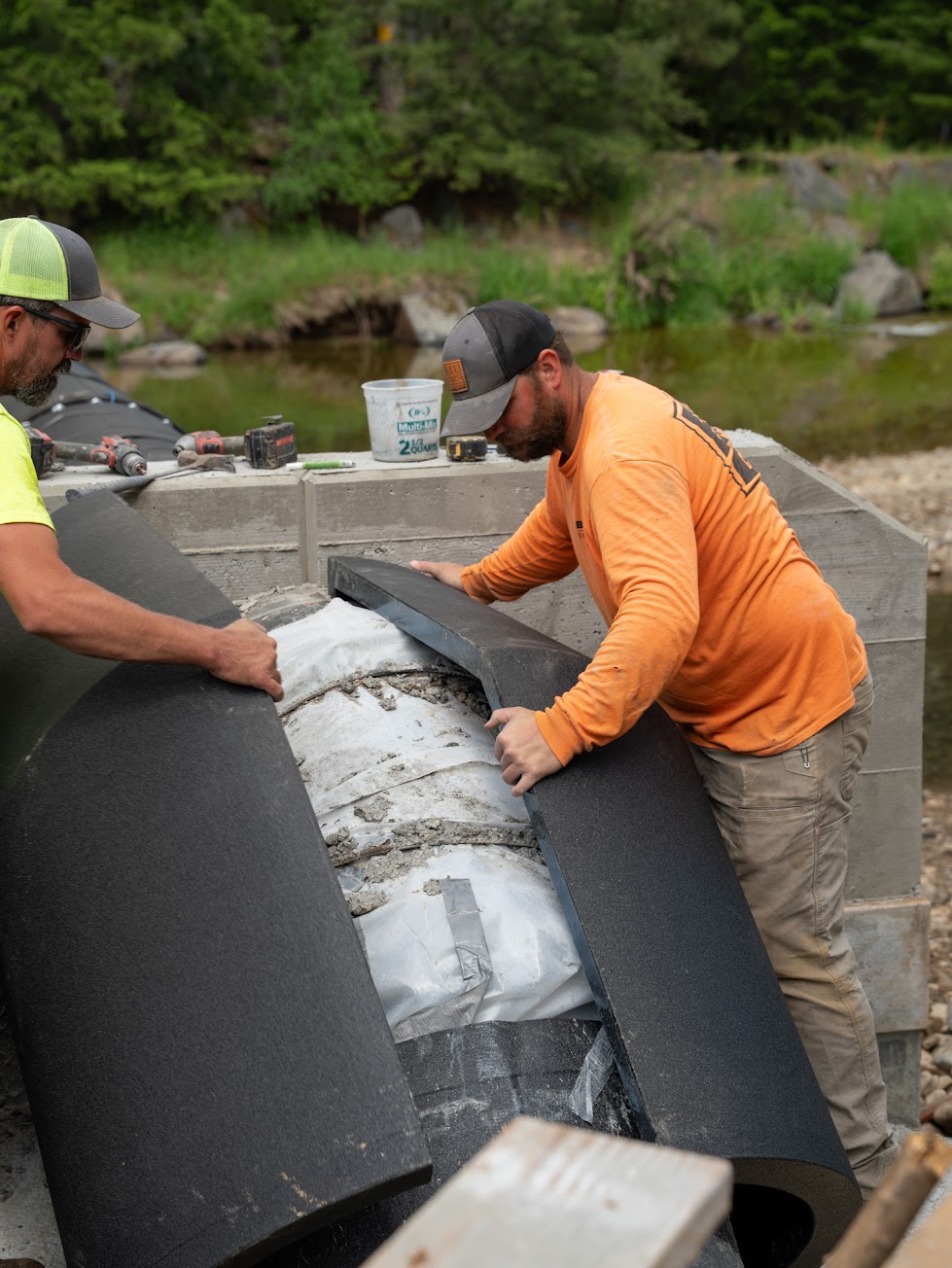
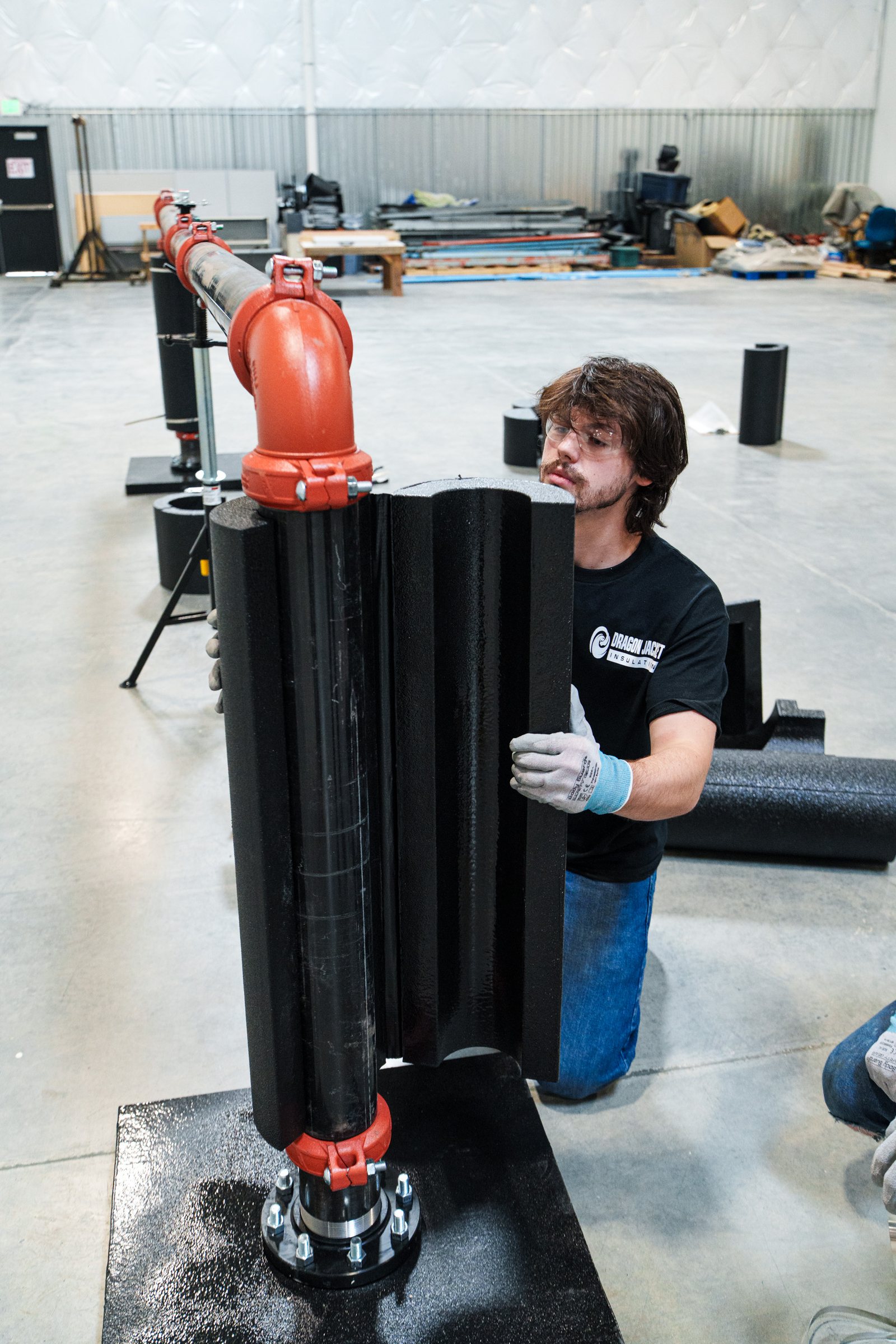
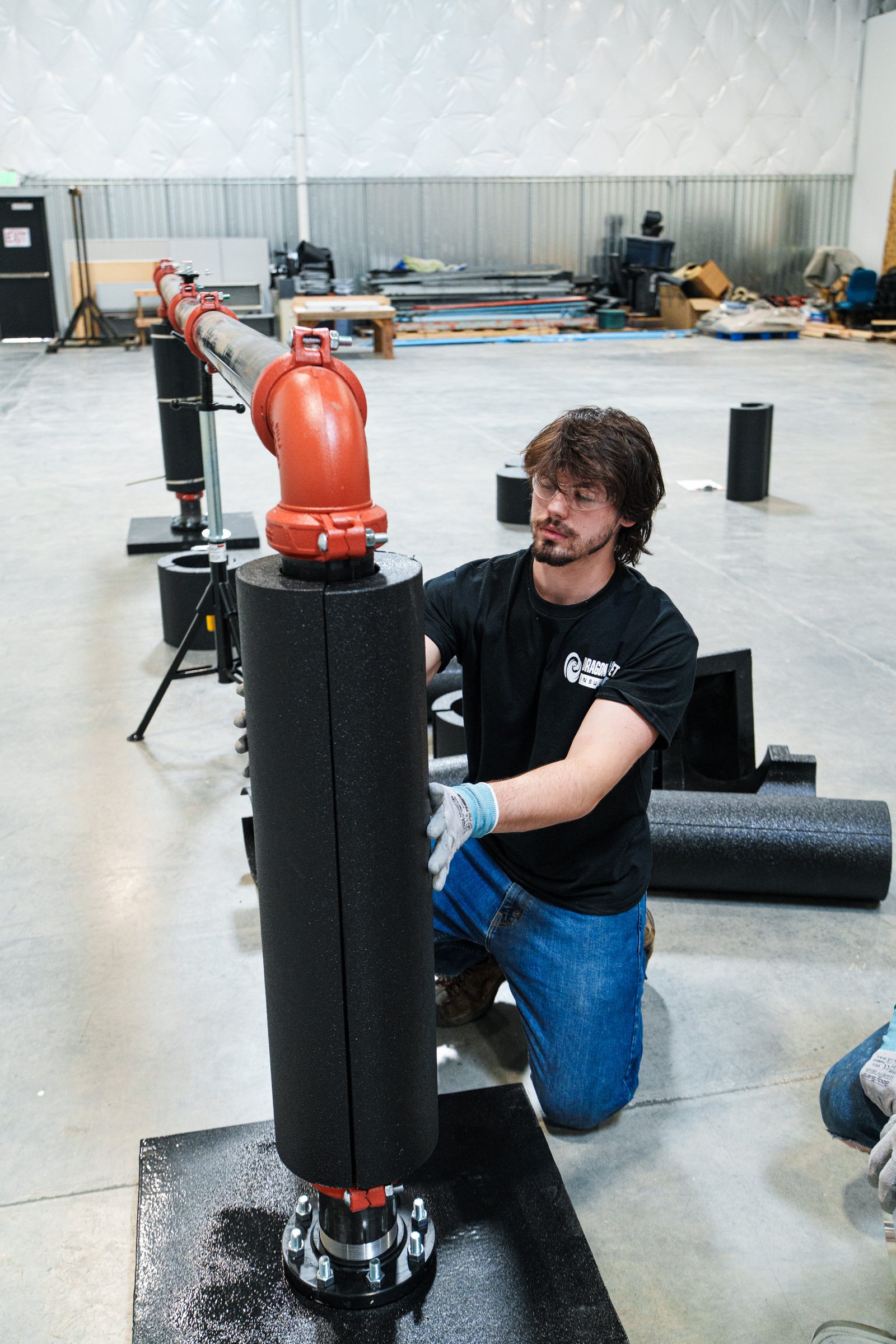
It means the insulation arrives ready for service. Each Dragon Jacket component is prefabricated to the pipe or fitting it covers, with the foam, the weather barrier and the shape already done. Installing it is simply placing and banding it.
There is no cutting to fit a particular shape, no jacketing to form and seal, no mastic or vapor barrier to apply, no cure time and no weather window. The tools are a band tensioner and snips, or zip ties on small sizes. The crew is flexible: pipefitters, millwrights, plant maintenance, a general contractor’s laborers. No insulation trade is required, and no special training beyond a short walkthrough.
The same is true in reverse. A component installed without fabrication is removed without fabrication, so inspection and maintenance don’t consume the insulation.
What does conventional installation involve?
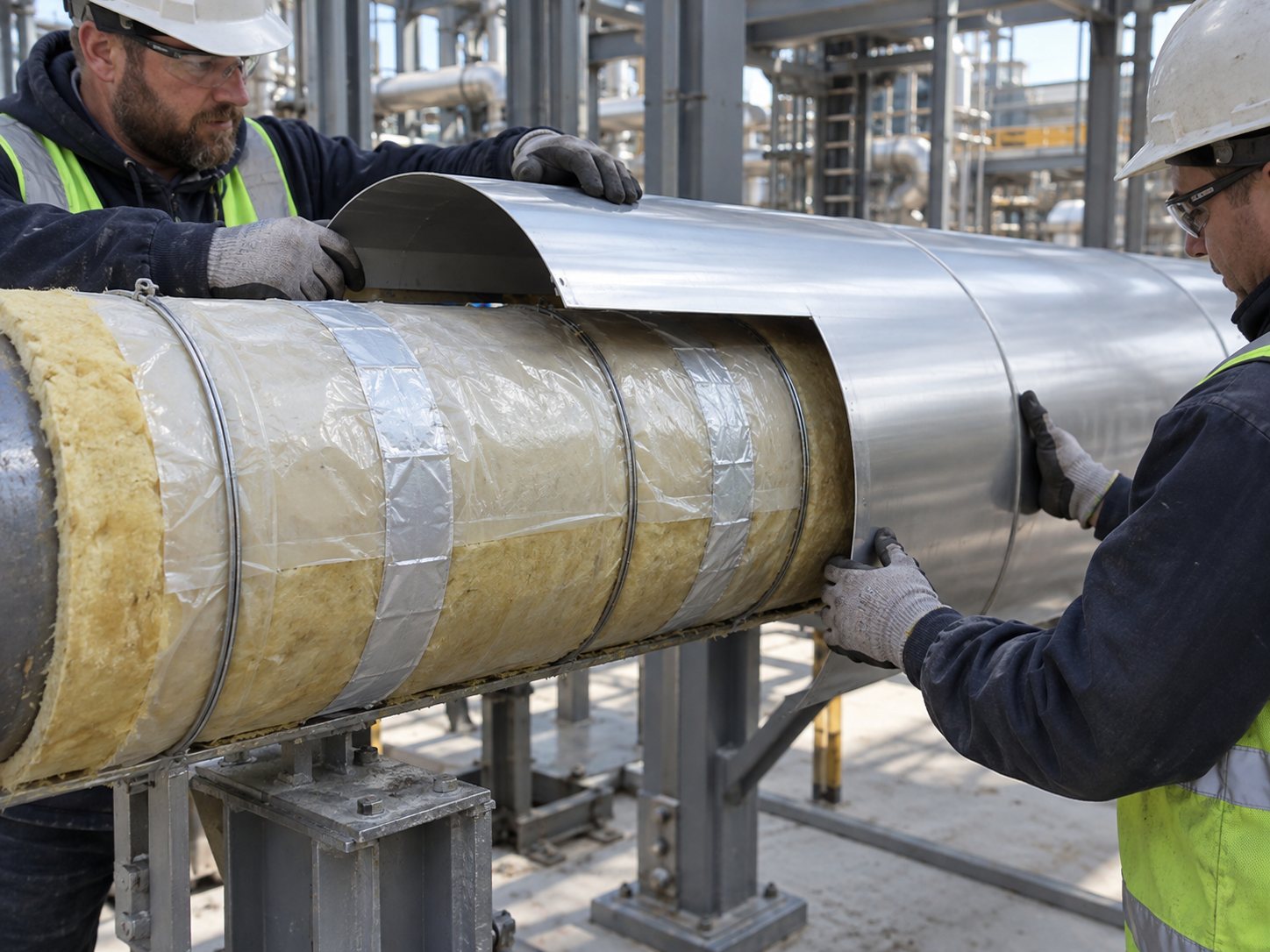
Conventional pipe insulation is not a product. It is an assembly built in the field from several materials, by a skilled trade, one layer at a time.
The industry’s own reference for how it is done, the North American Commercial & Industrial Insulation Standards Manual, runs to 126 detail plates covering the combinations of insulation, vapor retarder, jacketing, fittings, supports and terminations a system can require.5 On a typical outdoor line it comes down to five operations:
-
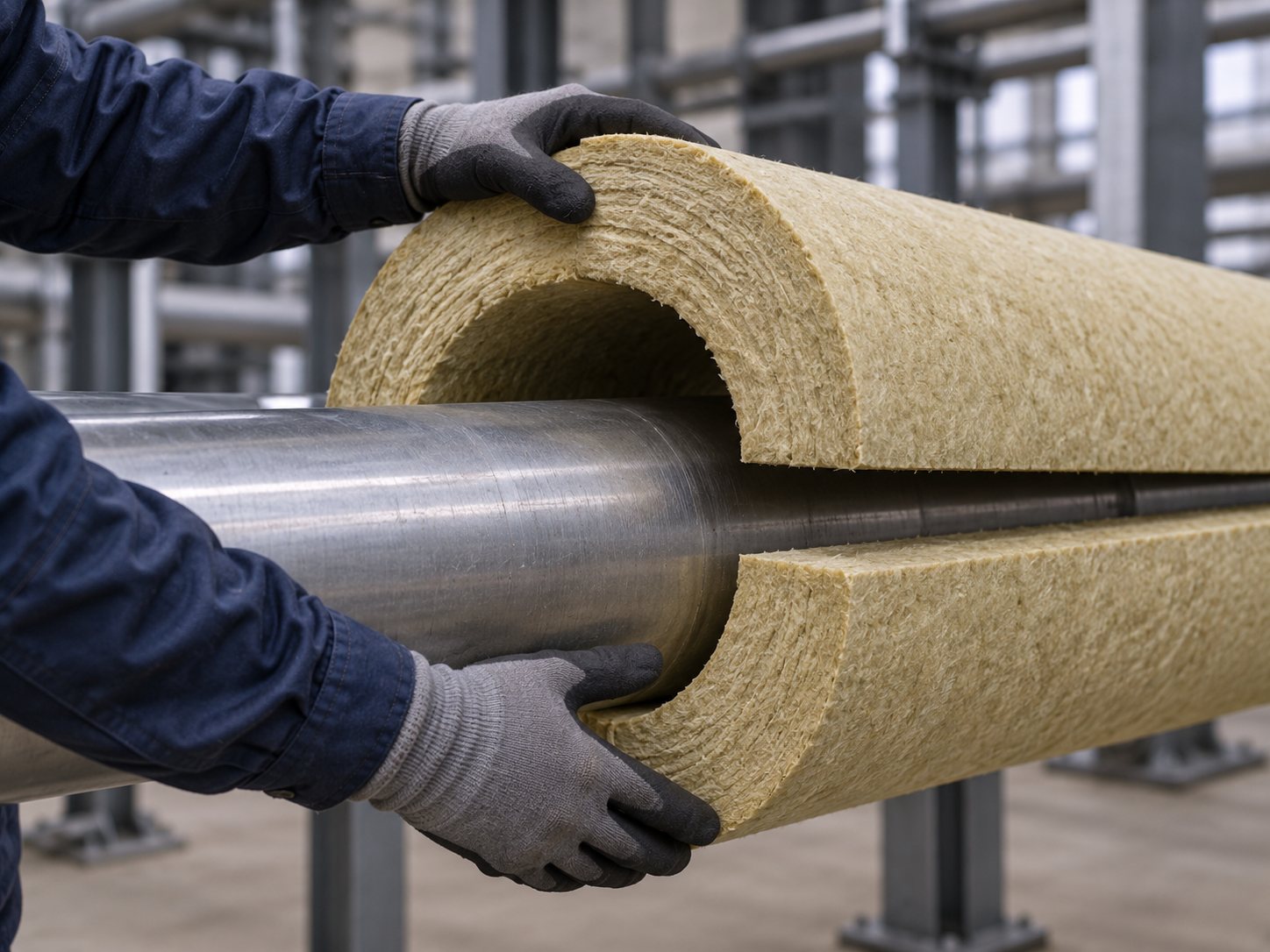
Fit the insulation
-
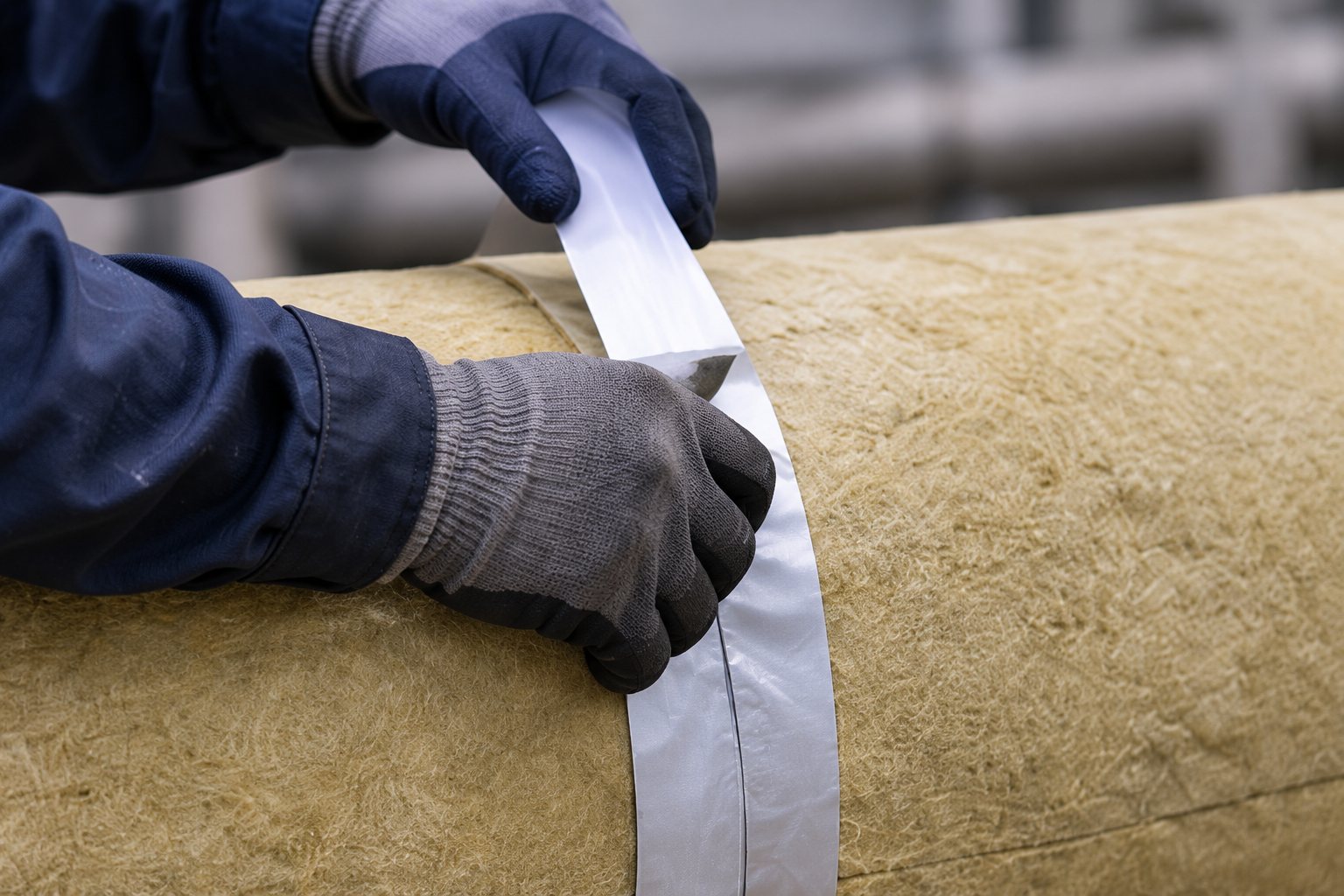
Tape the seams
-
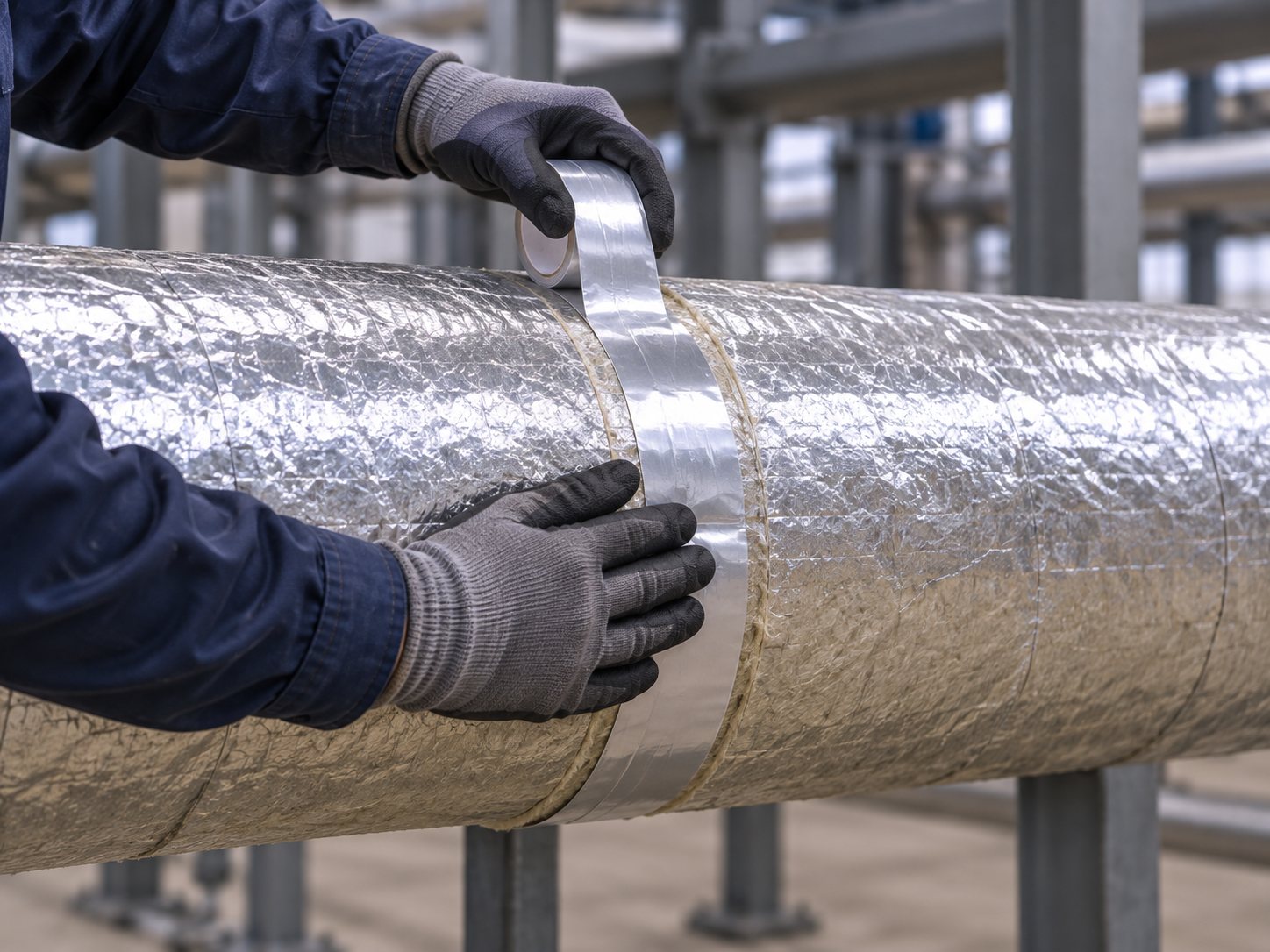
Apply the vapor barrier
-
Form and fasten the jacketing
-
Seal every joint
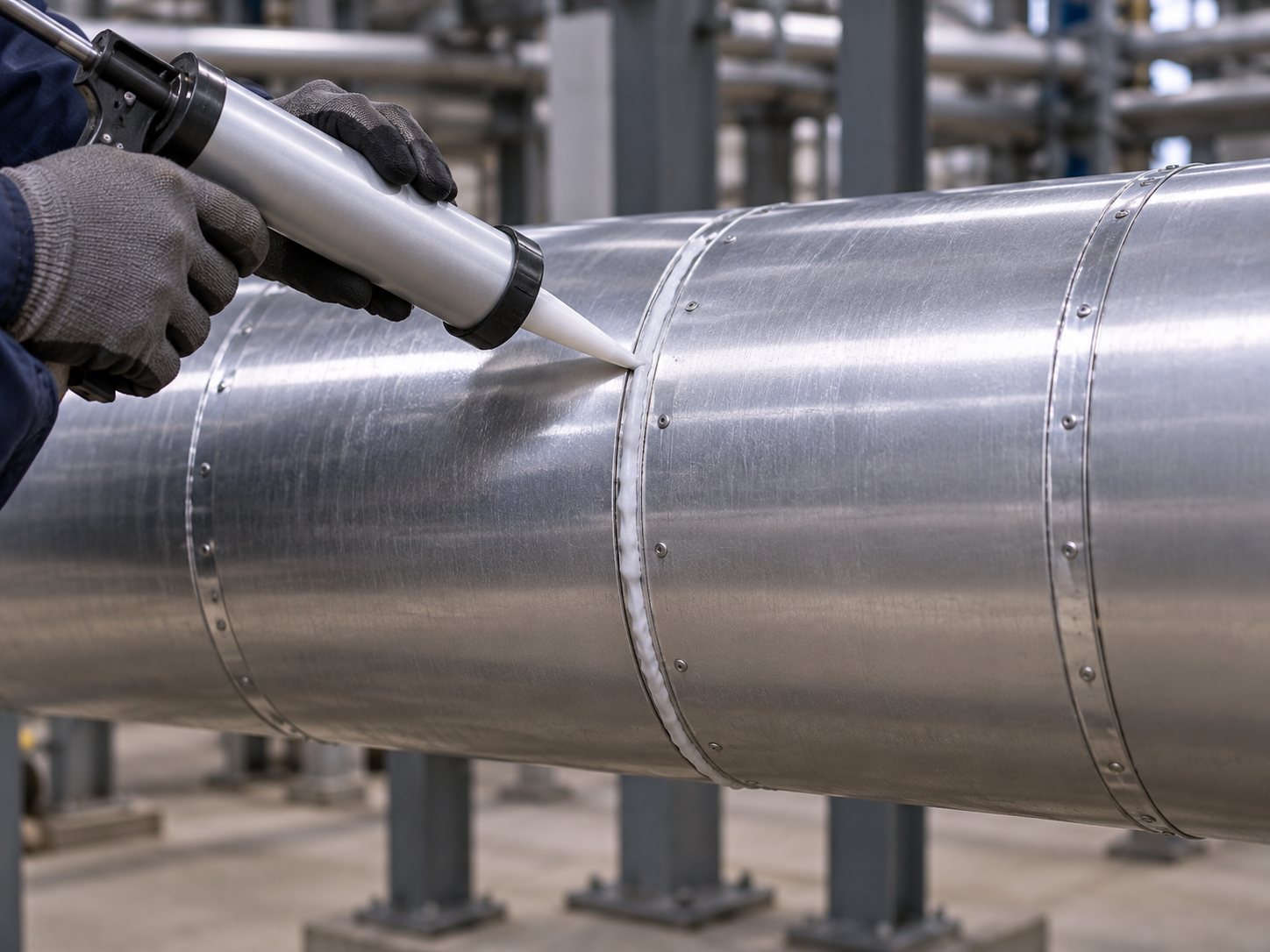
Every one of those steps happens at the pipe, often from a ladder or scaffold, and every fitting multiplies the work: elbows, tees and valves are built up from cut segments and pieced jacketing. The people who do it well are mechanical insulators, a trade the Bureau of Labor Statistics says is usually learned through a four- to five-year apprenticeship, and one whose hazards it lists as burns from pipes in service, cuts from knives, and fibers that irritate eyes, skin and lungs.2 That trade is in short supply on most job sites, which is why insulation is so often the last thing on the schedule and the first thing left undone.
Why does it matter?
Installation is most of the cost of insulation, most of the schedule risk, and most of the safety exposure.
- Cost. In the National Insulation Association’s most recent industry survey, 68% of mechanical insulation spending was labor and 32% material.1 Published estimating units put fiberglass with an aluminum jacket at 0.11 to 0.32 labor hours per foot of straight pipe between 2 and 12 inches, before any fittings or supports.9 In our own comparison on an 820-foot job with 160 fittings and 136 supports, Dragon Jacket installed in 3.2 days at $9,300 against 14.7 days and $31,791 for fiberglass with metal cladding.7
- Schedule. Conventional insulation waits on a specialty trade, on dry weather for sealants and mastics, and on scaffold time. Dragon Jacket’s prefabricated components go on when the pipe is ready and can be installed by the crew already on site.
- Safety. OSHA’s job hazard analysis guidance ranks engineering controls, which physically change the work, as the most effective kind, ahead of procedures and protective equipment.3 A component that is placed and banded removes the knife work, the fiber handling and most of the time spent next to hot pipe. The same guidance is plain about timing: “Any problems that can be corrected easily should be corrected as soon as possible.”3
- Maintenance. The Department of Energy notes that insulation “frequently becomes damaged or is removed and never replaced during steam system repair.”4 That happens because putting conventional insulation back is the same job as installing it the first time. A cover that reinstalls in minutes goes back on.
- Inspection. Corrosion-under-insulation programs under API RP 583 depend on getting to the steel, which with conventional systems means stripping and re-insulating whether or not anything is found.6 Removable insulation turns that into a simple process of removing the banding and component, performing the inspection, then re-installing in reverse order.
The field numbers line up with the published ones. In 2026 an insulation contractor bidding 1- to 4-inch process lines priced polyiso with PVC jacketing at 60 feet per installer per day, about 0.13 hours per foot.10 On a 2025 water-main project in Milan, Missouri, the general contractor’s own crew insulated 1,800 feet of 10- and 16-inch welded steel across three elevated bridge crossings in about 65 labor hours, with the pipe supports included: about 0.04 hours per foot.11
Installation labor, hours per foot of pipe

How does Dragon Jacket install?
-
Open and place
-
Close
-
Band and tension
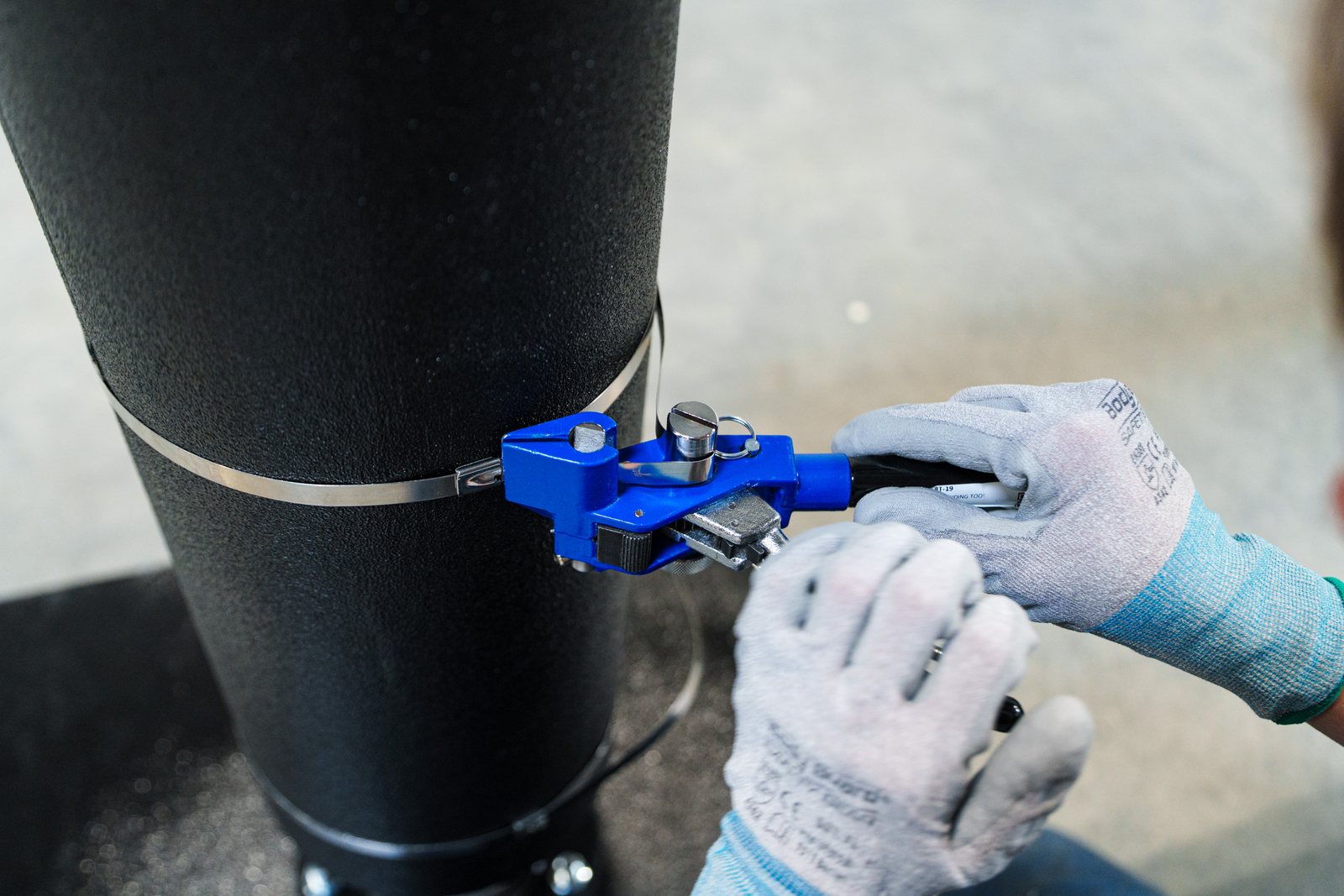
Straights come in standard 36-inch lengths and are cut to length on site with hand tools when a run does not divide evenly. Elbows, tees, reducers, flange and valve covers, and insulated pipe supports arrive as finished pieces sized to the fitting. The parts of the line that take the most time with conventional insulation take the least with Dragon Jacket. Bands are stainless steel, tensioned with a supplied banding tool. The installation tips sheet covers field cuts, terminations and specific scenarios that require sealant.8
What’s required for precise fitment
Accurate takeoffs. Components are fabricated to the pipe diameter, specified wall thickness and fitting geometry. Send us your drawing set, takeoff, or CAD files. For as-built systems with no drawings, we can provide instructions on how to easily take a 3D scan.
Inspection and maintenance
Getting to the pipe and removing the insulation for inspection makes conventional insulation a maintenance line item. Dragon Jacket allows for maintenance and inspection crews to easily remove and reinstall the insulation, eliminating the line item completely.
-
Cut the bands
Snips. No knife work, no fibers, no jacketing to pry open.
-
Remove the component
After removing the bands, remove the insulation component and set it aside.
-
Inspect or repair
Bare steel, full access, for as long as the work takes.
-
Replace and re-band
Replace the insulation component with new bands. The line is insulated again in minutes, at its original thickness, with no new seams.
The ease of removing and reusing Dragon Jacket makes regular inspection intervals viable. When looking at the pipe costs calling a crew to strip and replace the insulation, inspections get deferred. When it costs a pair of snips and a band, there’s no reason to skip them. It is also why Dragon Jacket pairs with the CUI programs described in our corrosion under insulation page.
Where it matters most
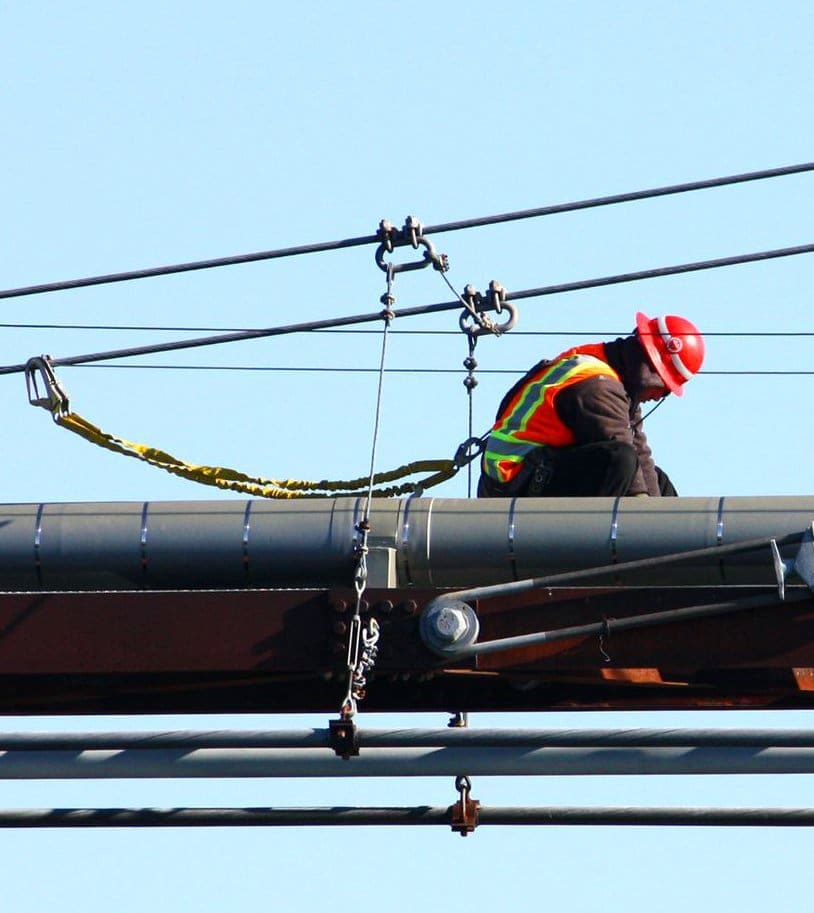
Anywhere the insulation crew is the bottleneck, the pipe is hard to reach, or the insulation will have to come off again.
Common questions
Is an insulation contractor required?
No. Dragon Jacket is designed to be installed by general contracting crews, maintenance teams, pipe fitters, and others who may not have insulation experience. A short walkthrough or the training videos are enough for a crew to be productive on the first day. If you prefer to use an insulation contractor, they will finish faster than they expect.
What tools are needed?
A stainless steel band tensioner and snips. On small sizes, UV-rated zip ties. A hand saw for cutting straights to length. Nothing is sprayed, troweled or cured in the field.
Can it be cut or adjusted in the field?
Straights are cut to length with a hand saw. Fittings are made to the pattern and should not need cutting; if a field condition is different from the drawings, send us a photo and we will tell you the fastest fix. The installation tips sheet covers the common cases.8
How are pipe supports and Unistrut handled?
With prefabricated insulated saddles and support covers, so the support is insulated rather than left as a gap. The Unistrut video above shows the sequence. See the pipe supports and saddles page for the options.
How long does a typical job take?
It depends on the fitting count and the access, which is why we quote installation time from the takeoff. For scale, the 2022 comparison in our one-sheet put an 820-foot run with 160 fittings and 136 supports at 3.2 days with Dragon Jacket, 14.7 days with fiberglass and cladding, and 19.6 days with cellular glass and cladding.7 In the field, 1,800 feet of 10- and 16-inch pipe across three bridge crossings took about 65 labor hours.11
Sources
- King, R. L. Survey Results: Mechanical Insulation and Laminated Metal Building Insulation for Commercial and Industrial Markets. Insulation Outlook, National Insulation Association, November 2023. Contractor-reported labor-to-material ratio of 68% labor and 32% material for 2022.
- U.S. Bureau of Labor Statistics. Insulation Workers, Occupational Outlook Handbook, last modified October 2026. Source for the four- to five-year apprenticeship and the hazards of the trade.
- U.S. Occupational Safety and Health Administration. Job Hazard Analysis, OSHA 3071, 2002 (revised). Source for the order of precedence of hazard controls and the quotation on correcting problems that can be corrected easily.
- U.S. Department of Energy, Advanced Manufacturing Office. Insulate Steam Distribution and Condensate Return Lines, Steam Tip Sheet #2, January 2012. Source for the observation that insulation is removed during repairs and never replaced.
- Midwest Insulation Contractors Association. North American Commercial & Industrial Insulation Standards Manual, 10th edition. The industry’s detail reference for conventional insulation systems, 126 plates.
- American Petroleum Institute. API Recommended Practice 583, Corrosion Under Insulation and Fireproofing, 1st edition, 2014. Inspection practice for insulated piping and equipment.
- Dragon Jacket Insulation. Installation comparison one-sheet, 2022. Our comparison of installation time and cost for 820 feet of straight pipe, 160 standard fittings and 136 Unistrut supports: Dragon Jacket 3.2 days and $9,300; fiberglass and cladding 14.7 days and $31,791; cellular glass and cladding 19.6 days and $42,435.
- Dragon Jacket Insulation. Installation tips and field modifications, 2022.
- Thomson, J. A., ed. 2026 National Plumbing & HVAC Estimator, 34th edition. Craftsman Book Company, Carlsbad, California, 2025. Labor units for fiberglass pipe insulation with factory-applied all-service jacket, plus the adder for 0.016-inch aluminum jacketing, pp. 398–400. The range and chart on this page are 2- to 12-inch pipe at 2-inch thickness, straight pipe only.
- Insulation contractor’s bid received by Dragon Jacket Insulation, 2026, for 1- to 4-inch process lines at a food-processing plant in Virginia: polyiso pipe insulation with PVC jacketing priced at 60 feet per installer per day (about 0.13 labor hours per foot). Contractor’s name withheld.
- Dragon Jacket Insulation project record. Water-main bridge crossings, Milan, Missouri, 2025: 1,800 feet of 10- and 16-inch welded steel with pipe supports across three elevated crossings, installed by the general contractor’s crew in approximately 65 labor hours.
Dragon Jacket documents