
Built to last
Easy to service
Prefabricated, removable insulation for bulk air cooling (BAC), mine water and process piping in surface and underground mines.
Discuss your piping project →Mining pipe insulation for surface and underground operations
- Process, reclaim and make-up water
- Heap leach solution lines
- Tailings and slurry lines
- Mill and concentrator piping
- Reagent and chemical lines
- Fire water and dewatering
- Bulk air cooling (BAC) piping
- Underground service water and compressed air
- Grooved piping and couplings
- Process and water tanks
Surface mine piping faces sun, washdown and equipment contact. Underground, heat, humidity and tight access complicate insulation installation and maintenance.
Our factory-fabricated pipe and fitting insulation combines a closed-cell polyisocyanurate core with a durable polyurea exterior. The system limits heat loss from process lines and heat gain into chilled-water piping, while providing removable access to the connections and components crews need to maintain.
Built for surface and underground
Freeze protection for exposed mine-water and solution lines
- Process, reclaim, make-up and fire water lines that stand still between shifts and through shutdowns
- Heap leach solution, tailings and slurry lines exposed to winter at the pad and the pond
- Polyurea exterior stands up to weather, washdown and contact with tools and equipment
- Where heat trace is required, the insulation installs over the trace as part of the freeze-protection system
Mill and concentrator piping
- Hot process, reagent and slurry lines in service up to 300°F
- Removable components at valves, pumps, strainers and instrument connections that are opened for maintenance
- Rated excellent after seven-day immersion in sodium hydroxide at 50% and calcium hypochlorite, and good in sulfuric acid at 10% and hydrochloric acid at 5%
- No metal cladding to corrode in splash and washdown zones
Bulk air cooling and underground service piping
- Chilled-water pipe insulation for bulk air cooling (BAC) systems, from the refrigeration plant through the reticulation mains and branches to the mine’s air coolers
- Heat picked up along the piping route adds to the cooling load; the closed-cell core and polyurea exterior keep condensation out of the insulation
- Service water, dewatering and compressed air lines in cold intake airways and near portals
- Thickness, joints, terminations and supports selected together for the water temperature and the surrounding humidity
- Dragon Jacket supplies prefabricated insulation for BAC piping at Hecla’s Lucky Friday mine
Safety at depth
- One prefabricated assembly per component instead of insulation, tape, moisture barrier, jacketing and sealant, so fewer pieces go down the shaft and fewer hands touch each one
- No sheet-metal jacketing to cut and fit around the pipe, so no sharp edges on the job
- Components close and band shut, then come off the same way for inspection, so less time working at the pipe and no demolition of wet insulation underground
Installation and maintenance access
- Prefabricated components reduce the field fabrication required around piping and fittings
- Crews position the components, secure them according to the installation instructions, and restore access when maintenance is needed
- Supported by Dragon Jacket’s component layouts and installation guidance
Shorter project timelines
Multiple layers.
Many steps.
- 01Insulation
- 02Tape
- 03Moisture barrier
- 04Jacketing
- 05Joint sealant
Each layer is a separate material, assembled on the job site by a specialty trade. Every seam, sealant joint and lap is a potential leak path.
One assembly.
Two steps.
- Insulation
- Moisture barrier
- Jacketing
Components arrive sized and labeled for the pipe or fitting they cover. Each assembly closes around the component and is secured with banding. Covers can be removed and reinstalled when valves, couplings or other connections need service.
Longer service life


Conventional
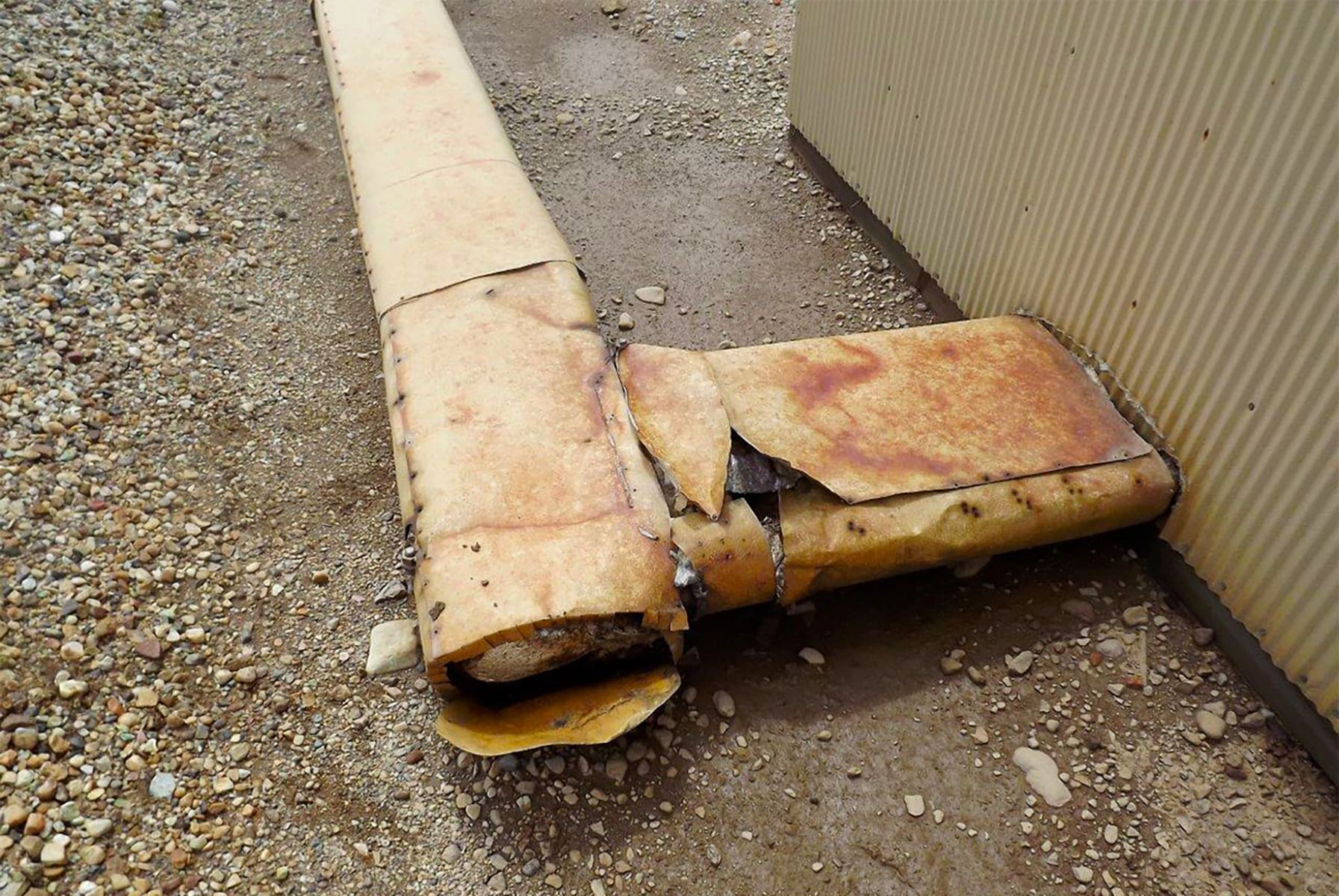
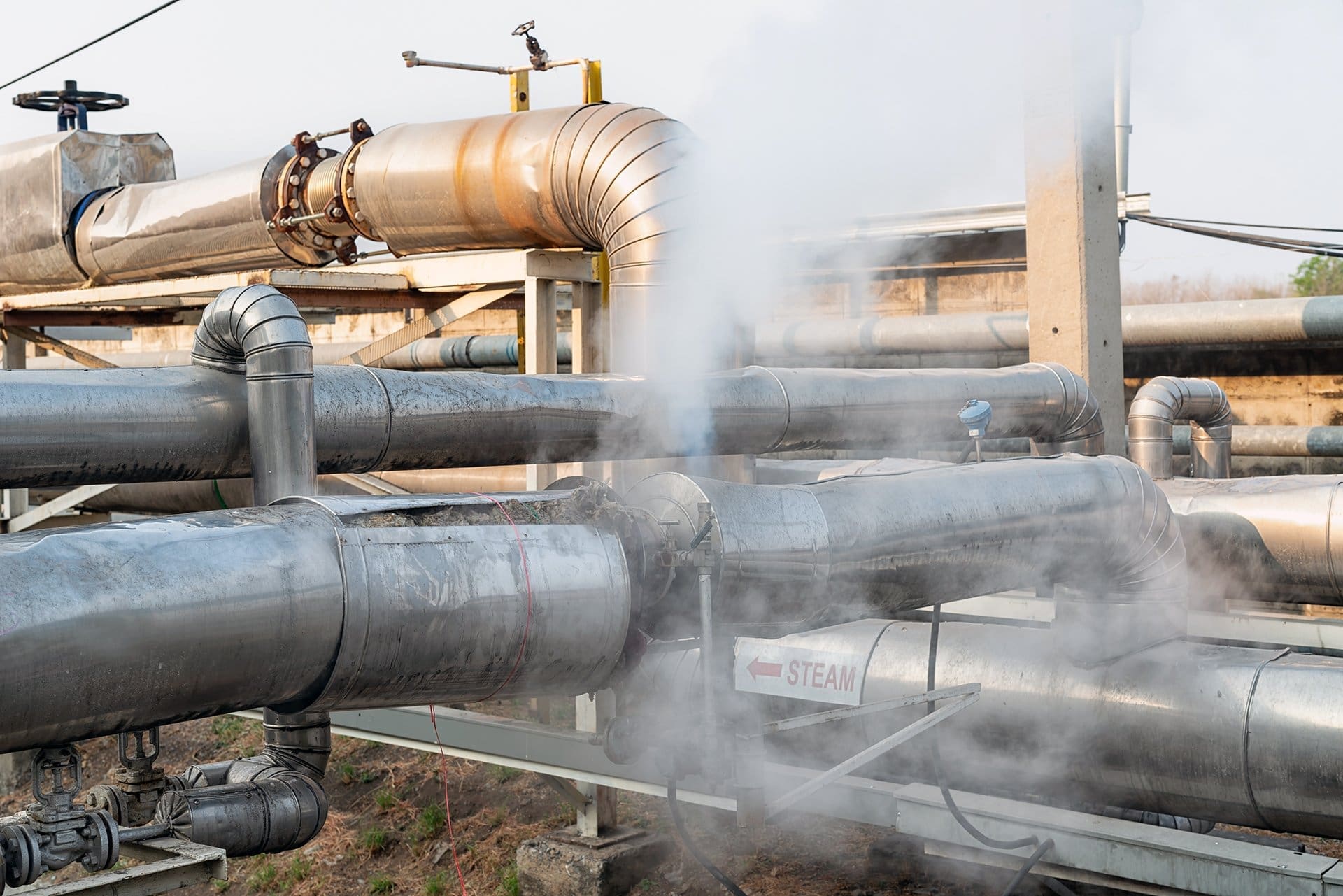
- Sun and weather break down jacketing and coatings on surface lines
- Rain and washdown get in at seams and laps, and wet insulation stops insulating
- Tools and equipment dent the jacket and crush the insulation under it
- Underground humidity condenses inside fibrous insulation on cold lines
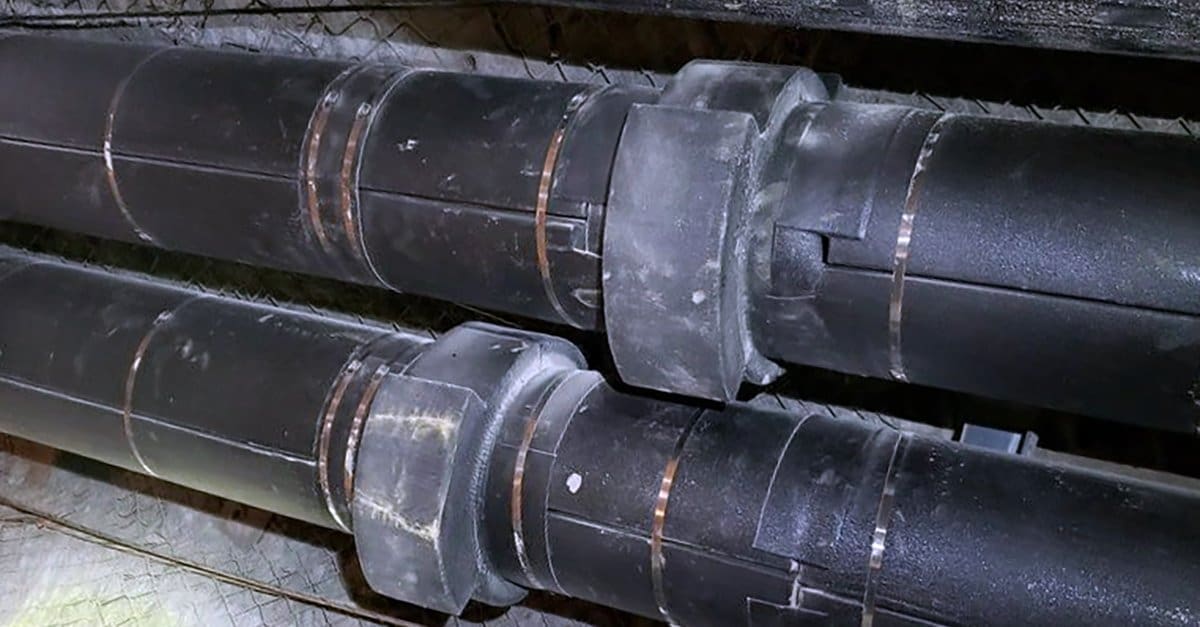


- Polyurea exterior stands up to weather, washdown and chemical splash
- Impact resistance of 320 in-lb (ASTM D2794)
- Closed-cell core absorbs less than 0.6% water by volume (ASTM C272); water vapor transmission of 0.64 grains/hr·ft² or less (ASTM E96)
- Removable and reusable at couplings, valves and equipment connections
Surface lines are beaten up from the outside: sun, rain, washdown and contact with tools and equipment open seams and crush fibrous insulation. Underground, chilled-water piping runs below the temperature of the air around it, so any moisture that reaches the insulation condenses there and stays. For cold-service applications, insulation thickness, joints, terminations and supports are selected together to address the water temperature and the surrounding humidity.
Dragon Jacket is rated for service from -40 to 300°F, is encapsulated in polyurea on every face before it ships, and is tested at 320 in-lb of impact resistance, so the same component works on a heated solution line at the pad and a chilled-water line at depth.
Thermal performance
Other industries we serve
Water &
Wastewater
Freeze protection for exposed mains, bridge crossings and bypass piping.
Explore industry →Oil &
Gas
Removable insulation for tank batteries, produced-water piping, skids and wellheads.
Explore industry →Chemical
Chemical-resistant insulation for process lines, splash zones and washdown areas.
Explore industry →Food &
Beverage
Washdown-tolerant insulation for process, chilled and hot water lines.
Explore industry →Shorter timelines
Longer lifespan
Send us your piping drawings, pipe sizes, coupling models, operating temperatures and site conditions, with maintenance-access needs and any applicable underground material requirements. We’ll come back with the components, insulation thickness and installation details for the job.