Category

Tank Insulation

Tank Roofs and Bases: How Dragon Jacket Insulation Performs for Tanks

By Tank Insulation

While industrial insulation is primarily associated with facility piping networks and runs, heated or cooled liquids and gases often require storage or transport on trucks, trains, or planes—and that means storing them in tanks.

Tanks present a different insulation challenge than piping. Where pipe insulation deals primarily with linear geometry and fitting transitions, tank insulation must address large surface areas, structural load points, exposure to standing water and ground moisture, and the practical reality that tanks are rarely taken out of service for insulation maintenance.

The consequences of insulation failure on a tank — corrosion on the shell, thermal loss from a poorly insulated roof, moisture accumulation beneath a base panel — develop slowly but carry significant remediation costs when they finally become visible.

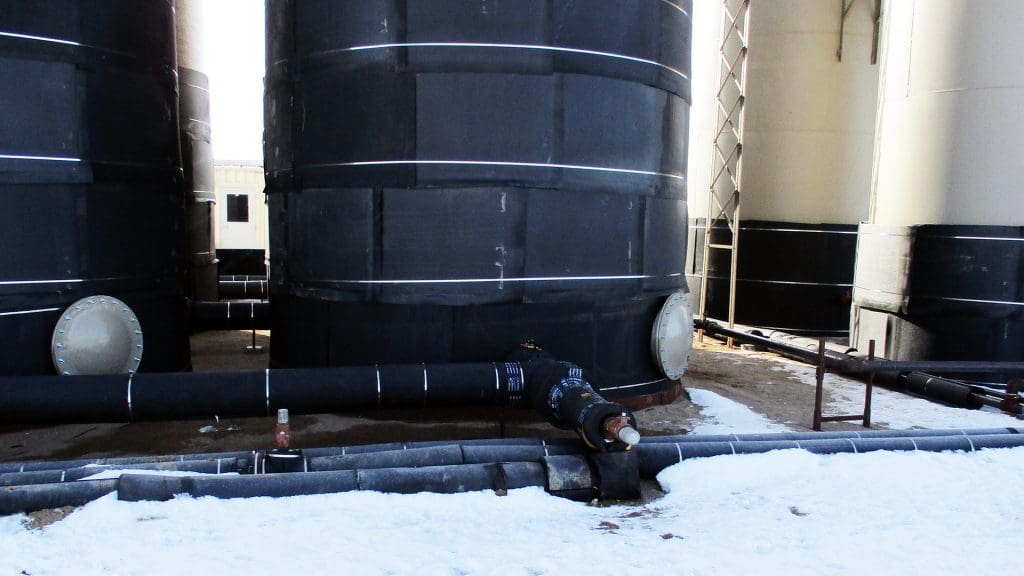
Dragon Jacket Insulation manufactures industrial insulation for all applications, including prefabricated tank insulation systems for roofs, panels, and bases. Unlike traditional insulation, Dragon Jacket insulation is engineered to address the specific failure modes that industrial tanks face, providing optimal coverage for every surface that will hold up over the long service life that tank assets typically demand.

Why Tanks Require a Different Approach

A tank is not simply a very large pipe. The insulation demands at a tank roof are different from those at the shell panels, which are different again from those at the base. Each surface has a distinct exposure profile, a distinct structural relationship with the tank, and a distinct set of failure modes that insulation must be designed to resist.

In addition, the gases and liquids in tanks are being stored, not transiting through. When cold or hot liquid or gases are moving through a pipe, the damage caused by a weak point in the insulation is minimal, mainly impacting energy consumption from the system trying to maintain process temperature; however, it does not necessarily compromise the overall integrity of the process. However, a weakness or insulation gap on a tank means that the contents may fall out of acceptable temperature tolerances. 

Tank surfaces can be immense, and in certain systems, such as those for oil and gas operations, are outside and exposed to the elements. Each surface — tank roofs, shell panels, and bases — face different failure modes when insulation underperforms, and a tank insulation specification that treats all three the same way is unlikely to serve any of them well.

Tank Roofs: Weather Resistance and Drainage

The roof of an industrial tank is a punishing location for insulation at any facility. Being fully exposed to weather, it carries the direct impact of rain, hail, UV radiation, and in cold climates, snow and ice loading. It must drain effectively to prevent standing water, and it must maintain its insulating properties despite repeated wet-dry cycling.

Conventional insulation materials applied to tank roofs — fibrous blankets, spray foam, or board insulation under metal jacketing — face a persistent challenge: keeping water out of the insulation system when the installation is horizontal and water has nowhere to go but in.

Metal jacketing on tank roofs requires carefully sealed seams and penetrations to prevent water entry, and those seals degrade over time through thermal cycling, UV exposure, and mechanical movement. When water gets beneath the jacketing, it sits on the insulation surface and eventually migrates into the insulation core. On a flat or low-slope roof surface, that water has no gravity assist to help it leave; instead, gravity keeps it where it is. Saturated insulation on a tank roof delivers a fraction of its rated R-value, adds significant weight, and creates a persistent wet interface with the tank shell that sets up corrosion conditions that are difficult and expensive to remediate.

Dragon Jacket’s fully encapsulated rigid panel system is inherently waterproof; it is not dependent on jacket seal integrity to exclude moisture and, consequently, performs differently in this environment. Water that contacts the insulation surface cannot penetrate the encapsulation, which means the insulation core remains dry and thermally effective regardless of rainfall, ponding, or condensation on the roof surface. The structural rigidity of the panels also means they maintain their thickness and coverage under snow or ice loading without compressing and losing R-value at the loaded points.

Tank Panels: Coverage, Durability, and Accessibility

The vertical shell panels of an industrial tank cover large surface areas that are exposed to a wide range of environmental and operational conditions depending on the facility. In outdoor installations, shell panels face UV, wind, temperature cycling, and precipitation. In process environments, they may be exposed to chemical splash, washdowns, or physical contact from equipment and personnel. In food and beverage or pharmaceutical facilities, they must withstand aggressive sanitation protocols without degrading.

Dragon Jacket’s prefabricated panel systems for tank shells offer consistent coverage across large surface areas without the seaming and transition complexity that conventional insulation systems accumulate at every joint and overlap. Panels are custom-designed to exact tank geometry, and connect with sealed, continuous joints to eliminate the moisture entry points that develop at seams in jacketed conventional systems. Rigid structural panels resist impact and abrasion from equipment and personnel contact without deforming or exposing the insulation core. The waterproof polyurea shell means insulation can be washed down without worry; water quickly beads and sheds off. And in applications where shell insulation must be removed for tank inspection or maintenance, prefabricated panels that can be removed and reinstalled without damage avoid the replacement cost cycle that conventional insulation creates at every inspection event.

For facilities with large tank populations — chemical storage, food and beverage processing, water and wastewater treatment, oil and gas storage — the cumulative advantage of panel systems that perform consistently across large surface areas, resist environmental degradation, shed water, and survive inspection access without needing replacement is substantial over the operational life of the assets.

Tank Bases: The Hardest Location to Get Right

Base insulation sits at the most demanding location: at the interface between the tank bottom and the ground or foundation, where moisture migration from below, compression under the full weight of the tank contents, and the near-impossibility of post-installation access combine to make material selection and installation quality critically important from day one. As demanding as tank roofs are, it is tank base insulation where specification errors are most costly and least recoverable. Once a tank is in service, its base is essentially inaccessible. The full weight of the tank and its contents bears down on the insulation continuously, moisture migrates upward from the ground or foundation, and any degradation of the insulation at the base goes undetected until it has been advancing for a considerable period.

Compressive failure is a primary risk when it comes to conventional insulation materials at tank bases. Fibrous materials compress under sustained load, losing thickness and R-value progressively over the operating life of the tank. Once compressed, they do not recover. The thin spots that develop under load create localized thermal bridges and, more seriously, create locations where the tank bottom contacts the insulation at reduced thickness, which changes the moisture and temperature conditions at the tank-insulation interface in ways that accelerate corrosion.

Dragon Jacket’s rigid closed-cell foam insulation is fully encapsulated in a structural polyurea shell to maintain its thickness under compressive load in a way that fibrous materials cannot. The structural integrity of the encapsulation material enables the base insulation to distribute the weight load across the panel surface more evenly rather than allowing point loading to compress the foam core at contact points. For tank base applications where insulation will be under continuous compressive load for the operational life of the asset, that structural stability is not a marginal improvement over conventional materials; it is a fundamentally different performance characteristic.

Moisture resistance at the base is equally important. Ground moisture and foundation condensation create a persistent upward moisture drive at the tank base that conventional insulation materials absorb over time. An impermeable encapsulated system that does not absorb moisture from below maintains its thermal and protective properties throughout the service life of the installation, rather than degrading progressively as moisture accumulates within the insulation core.

Dragon Jacket: A System Approach to Tank Insulation

Dragon Jacket Insulation has been engineered specifically to provide a solution for the common failure modes of most industrial insulation. Our system provides unique advantages in providing structural and thermal stability for almost every industrial application, including tank insulation.

One of the practical advantages of specifying a single insulation system that covers tank roofs, shell panels, and bases is the consistency it brings to installation, maintenance, and long-term performance expectations. When roof panels, shell panels, and base panels are components of the same engineered system, their transitions and connections work together.

Our system approach also simplifies the maintenance picture. Personnel familiar with one set of installation and reinstallation procedures can work across all three tank surfaces without needing to manage different materials, different fastening systems, or different performance expectations at different locations on the same asset.

Whether you are insulating a new tank installation, evaluating replacement options for a tank with underperforming insulation, or specifying a system for a facility with multiple tanks across different service conditions, Dragon Jacket Insulation can help you identify the right solution for your application. Contact us today to speak to an engineer, request a quote, or schedule a product demonstration.

Tank Insulation Products for Industrial Environments

By Industrial Insulation, Insulation Solutions, Tank Insulation

Industrial tanks are a common sight in numerous industrial systems, including chemical plants, oil and gas processing, mining, data centers, food and beverage production, and manufacturing. Whether storing process fluids, chemicals, cooling water, or temperature-sensitive media, these systems require insulation that performs reliably under very demanding environmental conditions. The priorities for selecting effective tank insulation are: maintaining thermal control, enabling efficient operations, and withstanding harsh environments over time.

Dragon Jacket Insulation’s tank insulation systems are designed to provide optimal thermal performance and operational efficiency to industrial tanks, withstanding the harshest environmental conditions while maintaining thermal efficiency and structural integrity, even for systems that involve moving parts.

The Role of Tank Insulation in Industrial Systems

Tanks are necessary for a number of industrial processes; they often contain large thermal masses exposed to fluctuating ambient conditions. Without effective insulation, they can experience:

  • Heat loss in heated storage applications
  • Heat gain in chilled or temperature-controlled systems
  • Increased energy demand to maintain process temperatures
  • Reduced process stability

In industries where uptime and consistency are critical for tank contents, insulation becomes a key component of overall system performance.

Performance Requirements for Tank Insulation

1. Thermal Efficiency

Maintaining consistent internal temperatures is essential for both process integrity and energy management. Effective tank insulation should:

  • Reduce heat transfer across tank walls, bases, and roofs
  • Maintain stable temperatures over extended periods
  • Support both high-temperature and low-temperature applications
  • Deliver consistent R-value without degradation

In large-scale operations, even small improvements in thermal performance can result in measurable energy savings.

2. Ease of Use

Like most industrial fittings, tank systems require periodic inspection, maintenance, and modification. Insulation should support and accommodate, rather than hinder, these activities. Key considerations include:

  • Fast installation to reduce project timelines
  • Minimal field fabrication, especially on large or elevated tanks
  • Removability and reinstallation for maintenance access
  • Clear labeling and system organization for efficient assembly

Prefabricated insulation systems address these needs by delivering components engineered for specific tank geometries, reducing the need for specialized labor and manufacturing complexity in the field.

3. Durability in Harsh Environments

Industrial tanks are often exposed to conditions that challenge conventional insulation systems:

  • UV exposure in outdoor installations
  • Moisture, rain, and humidity
  • Mechanical impact from equipment, personnel, or the elements
  • Chemical exposure in processing environments

Consequently, durable tank insulation systems must:

  • Resist water intrusion to maintain thermal performance
  • Withstand physical wear without degradation
  • Maintain structural integrity over time
  • Reduce the need for frequent repairs or replacement
  • Industry-Specific Applications

Data Centers: Thermal Control for Critical Cooling Systems

In data centers, tank insulation is commonly applied to chilled water systems and thermal storage tanks. These systems support cooling infrastructure where temperature consistency directly impacts uptime. Key requirements include:

  • Prevention of heat gain in chilled systems
  • Condensation control to protect surrounding equipment
  • Reliable performance in controlled indoor environments
  • Clean, low-maintenance solutions

Insulation that maintains tight thermal control helps reduce cooling loads and improves overall energy efficiency within the facility.

Mining: Durability in Extreme Conditions

Mining operations present some of the harshest environments for insulation. Tanks may store water, chemicals, or slurry in locations exposed to:

  • Abrasive conditions
  • Temperature extremes
  • Remote site logistics for maintenance or repair

In this context, insulation must deliver:

  • High impact resistance
  • Long service life with minimal maintenance
  • Ease of transport and installation in remote areas
  • Resistance to moisture and environmental exposure

Durable, prefabricated systems reduce the need for repeated maintenance in locations where access can be limited.

Refining: Performance in High-Temperature Environments

Refining operations rely on tanks for storing heated fluids, fuels, and process materials. These applications demand insulation that can handle elevated temperatures and continuous operation. Priorities include:

  • Minimizing heat loss to improve energy efficiency
  • Maintaining process temperatures for operational consistency
  • Supporting safety by reducing surface temperatures
  • Withstanding exposure to chemicals and industrial conditions

Reliable insulation contributes directly to both operational efficiency and plant safety.

Advantages of Prefabricated Tank Insulation Systems

Prefabricated insulation solutions, such as those offered by Dragon Jacket Insulation, provide a structured approach to addressing the challenges of tank insulation.

  • Precision Fit for Complex Surfaces: Tank geometries, including curved walls, bases, roofs, and nozzles, require insulation that conforms accurately to the surface shape, size, and configuration. Prefabrication ensures consistent coverage without gaps.
  • Reduced Installation Time: Components are manufactured off-site using as-built 3D modeling and delivered to the site ready to install, minimizing labor requirements and project timelines.
  • Consistent Performance: Factory-controlled production ensures uniform thickness, encapsulation, and material quality across all components.
  • Simplified Maintenance: Removable and reusable components allow for efficient inspection and repair without damaging the insulation system.

Common Challenges with Traditional Tank Insulation

Traditional insulation approaches often rely on multi-layer systems assembled in the field. These methods can introduce several issues that are especially problematic when it comes to industrial tank systems:

  • Inconsistent fit around curved or irregular surfaces
  • Increased labor and installation time
  • Vulnerability to moisture intrusion
  • Degradation due to environmental exposure

These challenges can lead to reduced thermal performance and higher lifecycle costs.

Supporting Long-Term Operational Efficiency

Tank insulation should be a long-term investment, not an ongoing operational expense and maintenance challenge. The right system should not only perform upon installation but continue delivering value over years of operation. Effective insulation supports:

  • Lower energy consumption
  • Reduced maintenance frequency
  • Process stability
  • Extended asset life

For facilities focused on efficiency and reliability, insulation plays a foundational role in achieving these objectives.

Talk to a Dragon Jacket Engineer

Tank insulation in industrial environments must meet demanding requirements across multiple dimensions: thermal performance, ease of installation and maintenance, and durability under real-world conditions. For industries that rely on tank systems such as data centers, mining, and refining, these factors are directly tied to operational success. Prefabricated insulation systems provide a practical solution by combining engineered precision with consistent performance and long-term reliability.

Contact Dragon Jacket Insulation today to speak with our engineers and learn how our prefabricated solutions can improve thermal efficiency and simplify installation and operations for industrial tank insulation systems that are able to withstand the demands of your operating environment.

The Hidden Cost of Corrosion Under Insulation

The Hidden Cost of Corrosion Under Insulation

By Features and Benefits, Insulation Solutions, Pipe Insulation, Sustainability, Tank InsulationNo Comments

The Hidden Cost of Corrosion Under Insulation

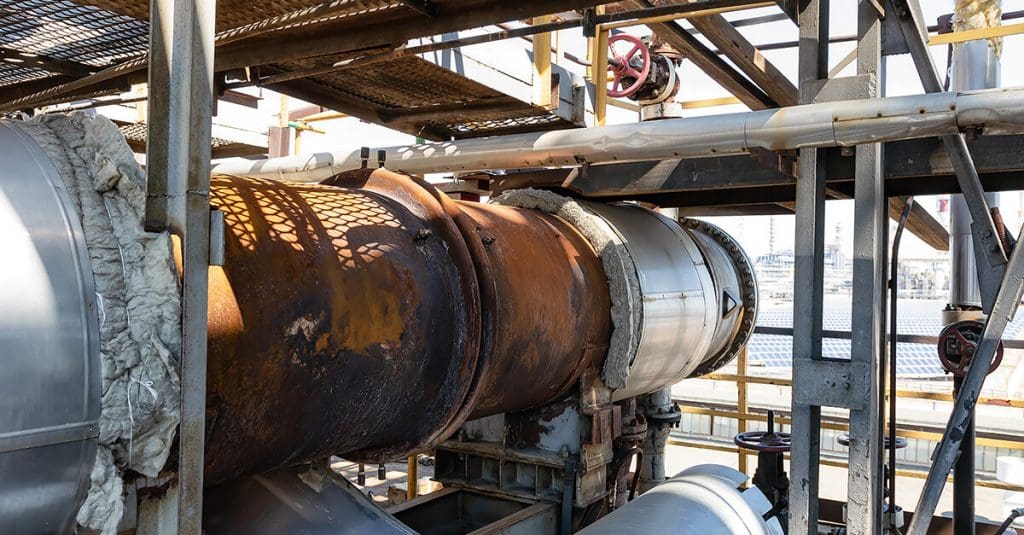
If you operate an industrial facility that transports fluids or gases through piping, corrosion under insulation (CUI) is a real risk. CUI occurs when water penetrates the insulation and sits in contact with metal piping or equipment for an extended period, creating the ideal conditions for rust and oxidation. Collectively, CUI issues are responsible for billions of dollars in maintenance and replacement costs across industries every year, as well as wasted energy consumption and disrupted services and production. 

At Dragon Jacket Insulation, we’ve approached the CUI problem by redesigning industrial insulation from the ground up, rethinking how insulation can accommodate modern industrial applications and avoiding the problems that traditional insulation presents. The result is a product composed of a closed-cell foam core coated with a durable and moisture-impermeable polyurea coating. Our monolithic clamshell design clamps over pipes and fittings with a simple band, obviating the need for separate jacketing and sealing, and eliminating the weak points that create the conditions that lead to CUI.


Why Traditional Insulation Systems Fail

Traditional multi-layer insulation systems consist of a porous insulation core (generally, fiberglass, mineral wool, or foam) covered by separate metal (tin or aluminum) jacketing, and sealed with fasteners and tape. In theory, this bulky system creates a moisture barrier that protects your underlying equipment. However, in practice, every joint, seam, and fastener is a potential failure point.

Over time, weather, vibration, impact, and thermal cycling open these seams or cause tears to develop. Water infiltrates. Once insulation becomes saturated with water, the trapped moisture has nowhere to go, and sits against your pipes. The sources of moisture are everywhere:

  • Rain, snow, and humidity in outdoor systems
  • Condensation from chilled or cryogenic lines in interior and exterior systems
  • Leaks from adjacent process systems
  • Washdowns and overspray during maintenance

The end result is moisture intrusion and corrosion of pipes hidden beneath the insulation layers. When wet or damp, the insulation loses R-value, which can accelerate condensation and, consequently, corrosion. However, in most cases, corrosion is undetectable because the jacketing hides the damage until leaks, failures, or costly shutdowns occur.

Ultimately, the problem is not just compromised or inefficient insulation. It is the degradation of the underlying structure, potentially shortening the lifespan of the pipes and fittings by years.


A Better Way: Dragon Jacket’s Moisture-Impermeable Design

Dragon Jacket Insulation was engineered to solve the moisture problem permanently. Each section is a single-piece clamshell: a high-R-value (R-6.25 per inch) closed-cell foam core fully encapsulated in a seamless polyurea shell. The clamshell closes tightly over piping, and is secured by metal bands. Unlike fiberglass or mineral wool, Dragon Jacket’s closed-cell core doesn’t absorb or wick water. Because there are no seams, joints, or separate jackets, there’s nowhere for water to enter; the seamless, monolithic design blocks water from every angle. The result is a truly waterproof insulation system that maintains thermal integrity and keeps metal components dry for decades.


UV-Resistant, Impact-Resistant, and Built to Last

CUI prevention isn’t solely about keeping water out. The system needs to maintain that protection through every environmental challenge. Dragon Jacket’s polyurea shell is UV-stable, impact-resistant, and chemically inert. That means that, whether exposed to driving rain, coastal salt spray, or freeze/thaw cycles, Dragon Jacket maintains its integrity and performance. Even after years of direct sun exposure or mechanical impact from tools or debris, the outer shell remains intact, continuing to seal out moisture and protect the pipe beneath.


Faster Installation, Easier Maintenance

Dragon Jacket arrives prefabricated to exact specifications, either using 3D scanning software or schematics, ensuring a perfect fit. Installation is straightforward:

  • Clamshell the pre-formed section around the pipe.
  • Secure it with stainless steel bands or other approved fasteners.

No adhesives, coatings, or sealants are required. When maintenance is needed, crews can remove a section and reinstall it with a new band when inspection or maintenance is complete; there is no need to replace the insulation. That reusability saves time and cost.


Proven Cost Savings Through Long-Term Protection

Repair and replacement costs due to CUI easily dwarf the initial cost of insulation. You can protect your investment by dramatically reducing the risk of water intrusion. Dragon Jacket delivers measurable savings through:

  • Reducing CUI risk: No trapped moisture, no corrosion
  • Stable R-value: Insulation performance remains consistent for decades
  • Reduced maintenance: No patching, recoating, or replacement
  • Extended service life: Typical lifespan exceeds 20 years in outdoor environments

For maintenance managers and engineers, the value is clear: a moisture-impermeable system that is purposely made to prevent failure before it starts.


Insulation, not Moisture, is the Real Problem

If corrosion under insulation is a recurring line item or treated as an acceptable risk in your maintenance budget, it’s time to rethink your insulation system. Dragon Jacket’s engineered, moisture-impermeable system provides lasting protection, consistent thermal performance, and the peace of mind that comes with knowing CUI isn’t lurking somewhere beneath the surface of your insulated piping. The technology behind that confidence translates into better bottom line performance for your entire operation in lower initial costs, decreased repairs, and, most importantly, pipes that don’t experience CUI.

Contact Dragon Jacket Insulation today to request specifications, consult on a project, or obtain a cost-benefit analysis. Discover how Dragon Jacket’s true moisture impermeability can reframe your expectations of how insulation can support your operation.